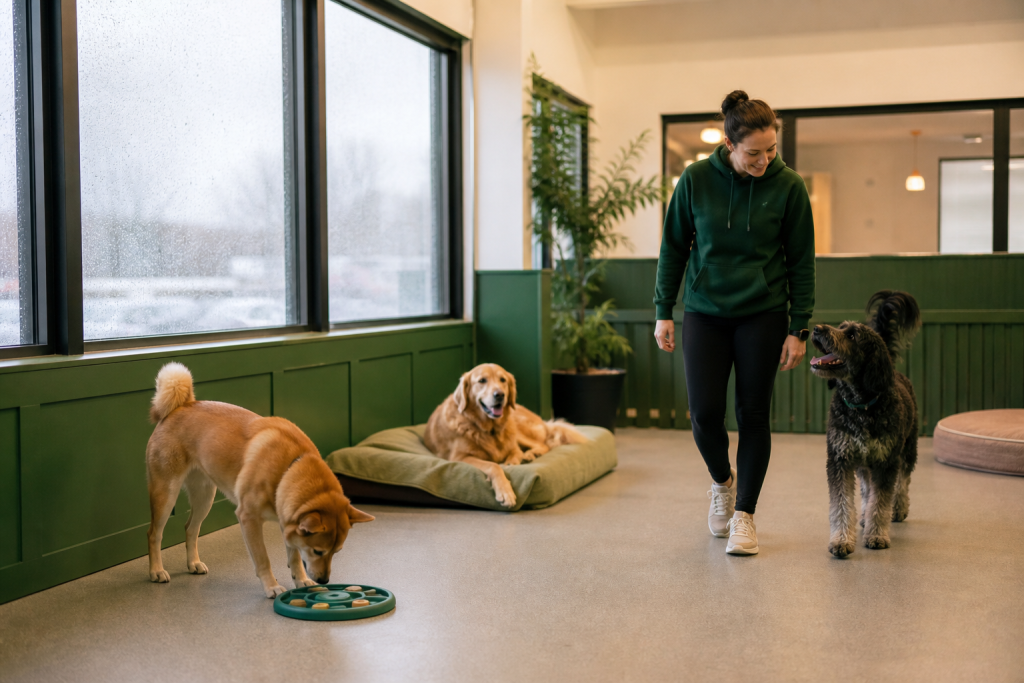
Early puppyhood is full of firsts: the first walk around the block, the first new sound, the first friendly dog, and the first time away from home. Puppy daycare can give a young dog useful opportunities to explore those experiences, but the quality of the environment matters. The goal is not simply to put puppies together and let them tire each other out. Thoughtful puppy daycare in Chicago should create positive, supervised experiences while respecting each puppy’s age, comfort, energy, and communication.
For Chicago pet parents balancing work, errands, and a puppy’s growing needs, daycare can become part of a practical routine. It can provide activity, human attention, and carefully managed interaction during the day. It should also include breaks, observation, and a plan for helping puppies avoid becoming overwhelmed. This guide explains what responsible socialization can look like, what questions to ask, and how to decide whether a daycare setting is a good fit for your puppy.
What Puppy Socialization Really Means
Socialization is often described as meeting other dogs, but it is broader than that. A puppy is learning how to respond to people, surfaces, sounds, movement, handling, routines, and unfamiliar spaces. Positive exposure can help a puppy build a useful library of ordinary experiences. The emphasis should be on quality, not on the largest possible number of encounters.
A good experience leaves a puppy able to recover and continue engaging. A puppy who is continually hiding, freezing, fleeing, or becoming frantic may need more distance, a quieter activity, or a break. Responsible caregivers notice these changes rather than assuming every puppy should participate in the same way. Socialization is not about forcing interaction. It is about creating safe opportunities and letting confidence develop at an appropriate pace.
Dog-to-dog play is one component. Puppies can practice reading pauses, invitations, changes in speed, and signals that another dog needs space. They can also learn that exciting activity is followed by settling. Those lessons are easier to support when playgroups are intentionally formed and actively supervised.
Why Supervision and Group Fit Matter
Puppies vary widely even when they are the same age. One may approach every new friend immediately, while another needs time to watch. Size is relevant, but temperament, play style, confidence, and current energy matter too. A thoughtful daycare team considers the whole puppy instead of relying on a single rule.
Active supervision means more than having an adult in the room. Caregivers should watch body language, redirect play before it becomes too intense, provide breaks, and adjust the group when needed. They should understand the difference between reciprocal play and one puppy repeatedly pursuing another that is trying to disengage. They should also notice when a normally social puppy becomes tired and needs a calmer setting.
Ask how the daycare evaluates new dogs, forms groups, and responds when a puppy appears uncomfortable. Clear answers show that the facility has a repeatable care process. Pet Care Plus uses structured care and offers puppy-focused services as part of its Chicago daycare experience. A tour gives you the best opportunity to see the environment and discuss your puppy’s individual needs with the team.
Healthy Play Includes Pauses and Rest
Nonstop activity can look exciting on a short video, but it is not the only sign of a productive day. Puppies are still developing physically and emotionally. They benefit from a rhythm that includes activity, quieter moments, meals when applicable, water, and rest.
Pauses help caregivers see whether both puppies choose to return to play. They also teach young dogs that they can settle in an interesting environment. A puppy who comes home pleasantly ready to rest is different from one who is so overstimulated that settling becomes difficult. Pet parents should look at the puppy’s behavior over the whole evening and following day, not only at how tired the puppy appears at pickup.
A daycare routine should be flexible enough to respond to the dog in front of the caregiver. Some puppies may enjoy a longer social session. Others may do better with shorter interactions, enrichment with a person, or additional rest. Consistency does not require treating every puppy identically.
Preparing for a First Puppy Daycare Visit
Preparation begins before arrival. Contact the facility to understand its current enrollment process, vaccination requirements, arrival schedule, and what you should bring. Requirements can change, so confirm them directly rather than relying on an old social post or a general online checklist.
Share useful information honestly. Tell the team about your puppy’s age, normal routine, play history, sensitivities, feeding needs, and any behaviors you are working on. Mention whether the puppy has spent time away from you and how the puppy responds to unfamiliar people and dogs. This context helps caregivers plan an introduction that is more likely to be comfortable.
Keep the handoff calm and straightforward. Long, emotional goodbyes can add intensity to a moment that is already new. Follow the facility’s arrival instructions, provide clearly labeled items when requested, and make sure staff know how to contact you. If you are unsure about anything, ask before leaving.
What to Observe After Daycare
Your puppy’s behavior provides useful feedback. Normal tiredness after an active day is expected, but look at eating, drinking, movement, bathroom habits, willingness to engage, and the ability to settle. One visit does not define a puppy’s long-term daycare fit, yet repeated patterns deserve attention.
Ask the daycare team how the day went. Useful feedback is specific: which activities the puppy enjoyed, whether the puppy rested, how introductions were handled, and whether caregivers noticed any signs of discomfort. A simple "great day" is pleasant, but observations help you understand what supported your puppy.
If something seems unusual or you have a health concern, contact your veterinarian. Daycare staff can observe and share what they saw, but they are not a substitute for veterinary diagnosis or treatment. This distinction protects your puppy and keeps each professional working within the right role.
Signs a Puppy May Need a Slower Introduction
Some puppies enter a new room ready to investigate. Others need a gradual approach. A slower introduction may be appropriate when a puppy consistently avoids interaction, has limited experience with other dogs, becomes highly aroused around movement, or struggles to recover after a new event.
Slower does not mean unsuccessful. It can mean shorter visits, more one-on-one time, a smaller compatible group, or a tour before the first full day. It may also mean waiting and working with qualified professionals on foundational skills before trying again. The right pace is the one that supports useful learning without flooding the puppy with more stimulation than the puppy can process.
Pet parents should be wary of promises that every puppy will immediately love group daycare. Dogs are individuals. A trustworthy provider can explain the options available when a puppy’s needs do not match a large or highly active group.
Questions to Ask a Chicago Puppy Daycare
A tour and direct conversation can reveal more than a polished homepage. Ask who supervises play, how new puppies are introduced, and how staff decide which dogs interact. Find out how rest is incorporated and how the team communicates concerns. Ask what happens if a puppy needs space or does not appear comfortable in the planned group.
You can also ask about cleaning routines, access to water, emergency contact procedures, and the process for sharing care instructions. Confirm operating details, current requirements, and booking availability with the facility. Avoid assuming that every service or amenity applies to every puppy or every reservation.
At Pet Care Plus, Chicago pet parents can explore daycare, puppy socialization, the resort, and booking information before making a decision. Reviewing those resources and scheduling a tour can help you connect the general principles in this guide with your own puppy’s needs.
Building a Helpful Routine Beyond Daycare
Daycare is one part of a puppy’s life, not the complete socialization plan. Calm neighborhood walks, short training sessions, appropriate handling, rest at home, and positive experiences with trusted people all contribute to development. Puppies also need opportunities to do nothing: to relax without constant entertainment.
Keep home routines predictable around daycare days. Your puppy may need a quieter evening and an uncomplicated schedule after a stimulating experience. Continue reinforcing skills such as responding to a name, checking in with you, settling, and moving away from excitement. These abilities can help a puppy navigate many environments, not only daycare.
Pay attention to frequency. More daycare is not automatically better. The useful schedule depends on your puppy, household, and goals. Some families use daycare on selected workdays, while others choose occasional visits. Discuss your puppy’s response with the care team and adjust when necessary.
Make the First Visit a Shared Learning Experience
Think of the first daycare visit as information for both your family and the care team. Give caregivers permission to tell you when your puppy needed extra space, preferred a quieter activity, or was ready to rest. Honest observations are more valuable than a perfect-sounding report because they help everyone plan the next visit thoughtfully.
At pickup, ask one or two focused questions instead of trying to evaluate every detail at once. You might ask which type of interaction your puppy enjoyed, whether settling became easier during the day, or what the team recommends for the next arrival. Then watch your puppy at home and share any useful follow-up. This simple feedback loop helps the daycare adapt care while helping you understand how your puppy responds to a new routine.
Choosing Puppy Daycare in Chicago With Confidence
The best choice is an environment where you feel comfortable asking detailed questions and where caregivers speak about puppies as individuals. Look for a clear process, appropriate supervision, structured activity, rest, and honest communication. Consider how the facility handles a puppy who needs something different from the original plan.
Location and convenience matter in Chicago, but care fit matters more. A nearby facility is only helpful when its approach aligns with your puppy’s needs. Schedule a tour, observe the overall atmosphere, and ask how the team would introduce your particular puppy. You should leave with a clear understanding of the next step rather than pressure to make an immediate decision.
Pet Care Plus has served Chicago pet families since 1998 from its West Loop location. If you are considering puppy daycare or puppy socialization, review the dog daycare experience, learn about puppy socialization, or contact the team to schedule a tour and discuss fit.
FAQs
What age should a puppy start daycare?
There is no single starting age that fits every puppy or every facility. Eligibility depends on the daycare’s current requirements, the puppy’s vaccination status, development, health, and comfort with the environment. Ask the daycare and your veterinarian what is appropriate for your puppy.
Is puppy daycare the same as puppy socialization?
Not exactly. Daycare can provide social experiences, but socialization also includes positive exposure to people, sounds, surfaces, handling, routines, and new environments. A responsible plan combines appropriate daycare experiences with calm learning in everyday life.
How do I know whether play is appropriate?
Healthy play is generally reciprocal and includes pauses, role changes, and opportunities for either puppy to disengage. Caregivers should intervene when one dog repeatedly pursues another, intensity keeps rising, or a puppy cannot recover comfortably.
Should puppies rest during daycare?
Yes. Rest and quieter periods are important parts of a balanced puppy day. Continuous stimulation is not necessary for a valuable experience, and a structured rhythm can help puppies practice settling as well as play.
What should I bring for a first daycare visit?
Follow the facility’s current instructions. You may be asked for vaccination records, care information, food or medication instructions when applicable, and clearly labeled items. Confirm requirements directly before arrival because policies can change.
What if my puppy seems nervous?
Tell the daycare team and ask about a gradual introduction, shorter visit, smaller compatible group, or more individual attention. Do not force interaction. If nervous behavior is persistent or you have a health concern, consult an appropriate qualified professional or veterinarian.
A Positive First Step
Puppy daycare can be a valuable part of city life when it combines thoughtful supervision, compatible groups, rest, observation, and communication. The aim is not to create the busiest possible day. It is to give a young dog manageable experiences that support comfort and learning. Start with questions, tour the environment, and choose a pace that respects your puppy. When you are ready, contact Pet Care Plus to discuss puppy daycare in Chicago and plan an introduction that fits your family.