
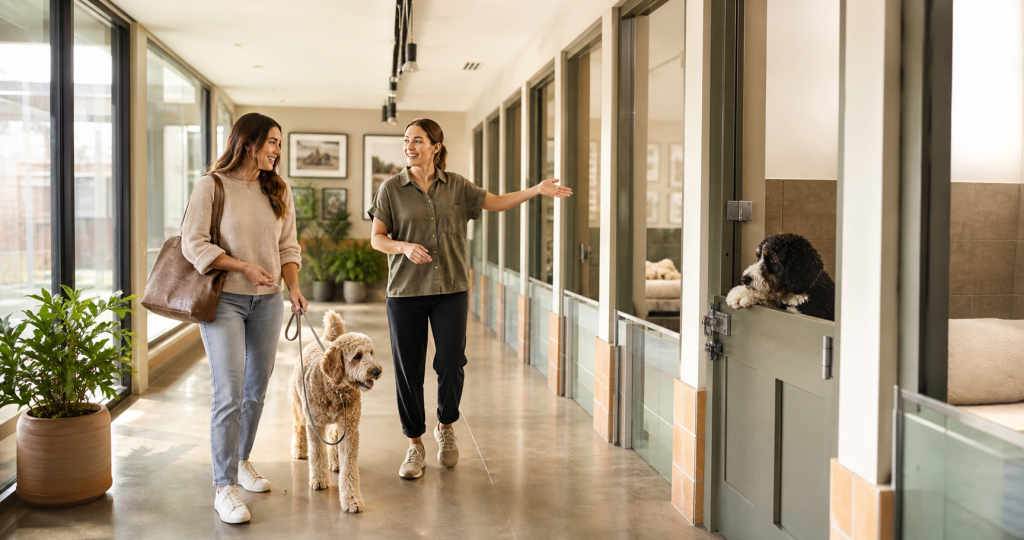
Choosing dog boarding in Chicago is more than comparing nightly rates or finding the closest address. Your dog will depend on the facility for supervision, meals, rest, movement, and communication while you are away. A thoughtful evaluation helps you identify a place whose daily practices match your dog’s health, temperament, and routine.
Start With Your Dog’s Individual Needs
Before touring facilities, write down what a successful stay requires. Consider age, mobility, medications, feeding schedule, comfort around other dogs, sensitivity to noise, and previous boarding experience. A social adult dog may enjoy an active schedule, while a puppy, senior, or easily overstimulated dog may need shorter activity periods and more rest.
Be direct about behavior and health history. A responsible boarding team needs accurate information to make safe care decisions. Ask whether the facility can accommodate your dog’s specific needs and what alternatives it recommends when a standard program is not the right fit.
Ask How Dogs Are Supervised
Words such as ?playtime? and ?supervised? can mean different things. Ask who watches the dogs, how staff members intervene when play becomes too intense, and how often groups are reassessed. Find out whether dogs are separated by size alone or whether play style, age, confidence, and energy are also considered.
Continuous activity is not automatically better. Dogs need opportunities to settle and sleep. Ask how the facility balances movement, enrichment, bathroom breaks, meals, and quiet time. A clear answer should describe an intentional daily rhythm rather than promising that every dog plays all day.
Review Overnight Care and Security
Ask what happens after evening activities end. Learn where dogs sleep, how spaces are secured, and what monitoring or staffing is present overnight. Confirm procedures for doors, gates, keys, alarms, and emergency access. If the facility offers webcams, understand where cameras are located and whether they cover play areas, lodging areas, or both.
Security also includes accurate identification and handoff procedures. A facility should have a reliable process for checking dogs in and out, recording belongings, confirming authorized pickup contacts, and keeping care instructions connected to the correct pet.
Inspect Cleanliness Without Expecting Silence
A working pet-care facility will have normal dog sounds and activity, but it should still look organized and maintained. Notice flooring, ventilation, water access, waste removal, odor control, and the condition of gates and enclosures. Ask how play spaces, lodging areas, bowls, and shared equipment are cleaned.
Look for secure surfaces and layouts that staff can monitor effectively. During a tour, observe whether dogs appear appropriately engaged and whether employees are attentive to body language rather than distracted by unrelated tasks.
Understand Health Requirements
Vaccination and health policies protect the wider boarding community. Ask which records are required, how they are verified, and what happens if a dog develops coughing, stomach upset, an injury, or another concern during a stay. Facilities should explain their isolation, notification, and veterinary-contact procedures clearly.
Discuss medications before booking. Confirm whether the team can follow the required schedule, how medication must be packaged, and whether additional documentation is needed. Never assume that every facility can support every medical condition.
Evaluate the Intake Process
A careful facility usually asks questions before accepting a reservation. The process may include reviewing records, gathering feeding and medication details, and evaluating whether group care is appropriate. This preparation is a positive sign: it helps the team plan instead of learning critical information after you leave.
For dogs new to boarding, ask whether a daycare visit, short stay, or other introductory step is recommended. Familiarity with the building and staff can make a longer reservation easier, but the best preparation depends on the individual dog.
Ask About Meals, Belongings, and Daily Updates
Find out whether you should bring your dog’s usual food, how portions are labeled, and how appetite is documented. Sudden diet changes can be disruptive, so precise instructions matter. Ask which bedding, toys, or comfort items are permitted and how belongings are tracked.
Communication expectations should be clear before departure. Ask when the facility contacts pet parents, what information updates include, and who to call with questions. Provide current phone numbers, an emergency contact, veterinary information, and travel details that affect your availability.
Compare Policies, Not Just Amenities
Beautiful photos and premium add-ons do not replace dependable procedures. Review cancellation rules, arrival and pickup windows, late fees, holiday requirements, and emergency authorization. Ask what is included in the base stay and what costs extra. A written estimate helps avoid surprises.
Also consider convenience features that genuinely matter to your trip, such as online booking or pet taxi service. Choose them because they reduce stress and improve logistics, not because they distract from the fundamentals of care.
Warning Signs During Your Search
- Vague answers about overnight supervision or emergencies
- No meaningful health-record requirements
- Unwillingness to discuss grouping and rest practices
- Strong pressure to book before your questions are answered
- Unclear pricing or pickup policies
- A facility that promises the same experience for every dog
One warning sign does not always tell the whole story, but unanswered safety questions should not be ignored.
Questions to Bring on a Tour
- How do you decide whether group play is appropriate?
- How are dogs grouped and supervised?
- When and where do dogs rest?
- What monitoring is present overnight?
- How do you handle medications or special meals?
- What happens during a medical or weather emergency?
- How will you contact me if something changes?
- What should I pack, and what should stay home?
Planning a Stay at Pet Care Plus
Pet Care Plus provides dog boarding in Chicago for families seeking an established West Loop care option. Before booking, review the current health and vaccination requirements and share complete information about your dog. A productive conversation should leave you understanding the schedule, preparation steps, and communication plan for the stay.
The right facility is the one that can explain how it will care for your dog?not simply the one with the longest amenity list. Give yourself time to ask questions, prepare records, and book early for busy travel periods.