
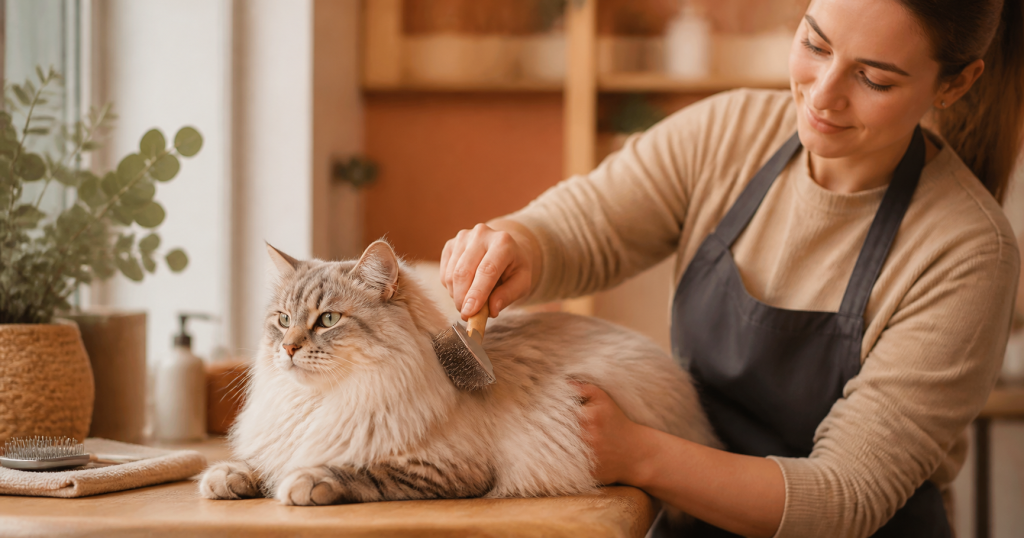
What Cat Grooming Includes
Cat grooming can include brushing, combing, claw care, and keeping the coat free of debris. The right routine depends on coat length, age, mobility, tolerance for handling, and guidance from a veterinarian or qualified feline groomer.
Start With Your Cat’s Normal Coat
Learn what is normal for your cat before changing the routine. Note coat texture, shedding patterns, favorite resting areas, and how your cat reacts to touch. A sudden or concerning change belongs with a veterinarian.
Short-Haired and Long-Haired Cats
Short coats may need less frequent brushing than long or dense coats, but no schedule fits every cat. Long-haired cats often need closer observation because tangles can form where the legs, collar area, and body meet.
Choose Tools Carefully
Use tools designed for a cat’s coat and begin gently. A comb, soft brush, or other feline-appropriate tool may suit different coat types. Stop if the cat becomes distressed, and do not use force to finish a session.
Introduce Brushing Gradually
Let the cat inspect the tool, begin with a brief session, and pair calm handling with a predictable routine. Several short sessions can be easier than one long session, especially for a cat that is new to grooming.
Watch for Tangles and Mats
Small tangles can tighten close to the skin. Do not pull, cut blindly, or attempt to remove a severe mat with household scissors. Ask a veterinarian or experienced feline groomer for the safest next step.
Claw Care Requires a Calm Plan
Cat claw trimming requires suitable tools, good visibility, and confidence about where to cut. If you are unsure, ask a veterinarian or feline-care professional to demonstrate rather than risking a painful trim.
Bathing Is Not Automatically Necessary
Many cats maintain their own coats, and bathing is not a routine requirement for every cat. Ask a veterinarian or qualified groomer when bathing is appropriate and which products are safe for the individual cat.
Older Cats May Need Different Support
Age and mobility can affect self-grooming and tolerance for handling. Adjust the pace, surface, and session length, and consult a veterinarian when reduced grooming accompanies a health or behavior change.
Know When to Pause
Stop when a cat shows escalating stress, tries to escape, or cannot be handled safely. A successful routine protects the cat and the person. Professional help is preferable to forcing a difficult grooming task.
Questions for a Cat Groomer
Ask about feline-specific experience, handling methods, the services offered, appointment length, records required, and what happens if the cat cannot comfortably complete the session. Confirm details before booking.
Coat Care Before Travel
Complete routine coat care early rather than immediately before a trip. If boarding is planned, share relevant care notes and confirm what the facility accepts. Avoid assuming grooming services are included with a stay.
What Cat Owners Should Not Assume
A glossy coat does not prove overall health, and a grooming concern cannot be diagnosed from appearance alone. Grooming supports routine care, while medical questions and unexplained coat changes belong with a veterinarian.
Cat Care in Chicago’s West Loop
Pet Care Plus provides cat boarding in a separate, feline-dedicated area staffed 24/7 at 350 N. Laflin Street. Cat grooming availability should be confirmed separately; this guide does not represent a grooming-service promise.
A Simple Coat-Care Routine
Observe the coat, choose an appropriate tool, keep sessions brief, and record questions for a professional. Consistency and calm handling matter more than trying to follow a rigid schedule copied from another cat.
Frequently Asked Questions
How often should I brush my cat?
Frequency depends on coat, shedding, age, mobility, and tolerance. Ask a veterinarian or qualified feline groomer for individual guidance.
Can I cut out a cat’s mat myself?
Do not cut close mats with household scissors. Ask a veterinarian or experienced feline groomer for the safest option.
Does every cat need a bath?
No single bathing schedule fits every cat. Confirm whether bathing is appropriate and which products are safe.
What if my cat resists grooming?
Keep sessions brief and stop before handling becomes unsafe. Seek professional help rather than forcing the task.
Do coat changes require a veterinarian?
Sudden, unexplained, or concerning coat and skin changes should be discussed with a veterinarian.
Does Pet Care Plus offer cat boarding?
Yes. Pet Care Plus provides feline-dedicated boarding in a separate, 24/7-staffed area in Chicago’s West Loop.
Plan Cat Care Before Your Trip
Explore dedicated cat boarding in Chicago, then request a new-client reservation or contact the team to confirm current availability and requirements.