If your dog’s normal meals include wet food, a label saying ‘one serving’ may leave the boarding team with a question. Does that mean a whole container, part of a container, or a measured amount combined with another food? Clear written instructions make the routine easier to discuss before the stay.
Start by asking Pet Care Plus which foods, packaging, and storage arrangements it can accept. This article does not promise refrigeration, raw-food handling, or any other storage service. The boarding team must confirm what works for your reservation.
Describe the meal someone else must prepare
Record the brand, product name, and container size for the food you actually provide. If two products have similar packaging, spell out which belongs to your dog. Keep ingredient and manufacturer information available instead of transferring everything into an unidentified container.
If the diet is veterinarian-directed, use the current instructions from the veterinarian. The purpose of the boarding note is to communicate an established plan, not to calculate a new portion or recommend a different diet.
A boarding food note works when a person unfamiliar with your kitchen can identify the product, understand the established amount, and ask the right question if something is unclear. Begin by describing an ordinary meal exactly as you provide it. If the meal combines wet and dry food, identify both products and the owner’s or veterinarian’s existing instructions for each. Avoid turning the note into a new feeding recommendation.
Use the packaging to check product names and container sizes rather than relying on memory. Similar-looking varieties can have different instructions, and a phrase such as “the chicken one” may not distinguish them. If your dog has a veterinarian-directed diet, keep the current written direction available and discuss any ambiguity with the veterinarian before boarding. The resort needs a clear accepted plan, not a choice between several versions of what you think was recommended.
Confirm acceptance before preparing the entire stay
Ask the resort whether the proposed product and packing method can be accommodated. Explain whether containers are unopened, whether part of a container is normally used, and what the manufacturer’s storage instructions say. Do not assume that the facility has a particular refrigerator, freezer, warming method, or preparation procedure. Confirm the actual arrangement before buying supplies or portioning the whole trip.
If the team requests a different packing approach, repeat it back in practical terms. Clarify how each portion should be identified and what should happen to anything left over. A conversation that ends with “we can work something out” may still leave important questions open. Ask which details must be settled before arrival so you can prepare once, correctly, instead of repacking at check-in.
Make portions clear without changing the diet
Write the amount and timing you have agreed to provide, including any dry food that is part of the same meal. Use the unit you can reliably identify on the packaging or measuring equipment. Ask the resort how it prefers those instructions to be presented.
- Dog’s name.
- Exact food and package size.
- Owner- or veterinarian-specified amount per meal.
- Normal meal times or the timing the resort has agreed to follow.
- Any mixing instructions already part of the established routine.
- A number to call if the written instructions are unclear.
Words such as scoop, spoonful, half, and serving depend on context. If you use them in your household routine, specify what they refer to in the accepted instructions. A half of one container is not the same as half of another size. A household spoon is not self-explanatory to someone who has never seen it. Ask the team which form of measurement it can reliably follow.
Do not calculate a new portion because the dog will be boarding or because another owner uses a different amount. The goal is to communicate the established plan. If you are uncertain about that plan, ask the veterinarian before writing the note. Keep the feeding instruction separate from general statements about appetite so the person preparing the meal can find the actual direction quickly.
Keep manufacturer information available
The original label can contain information that a handwritten container does not. Product identity, ingredients, package size, and storage directions may all matter to the handoff. Follow the manufacturer’s instructions and ask the resort how it wants that information supplied. A photograph can be helpful as a reference when accepted, but it should not replace the packaging or identification the team requires.
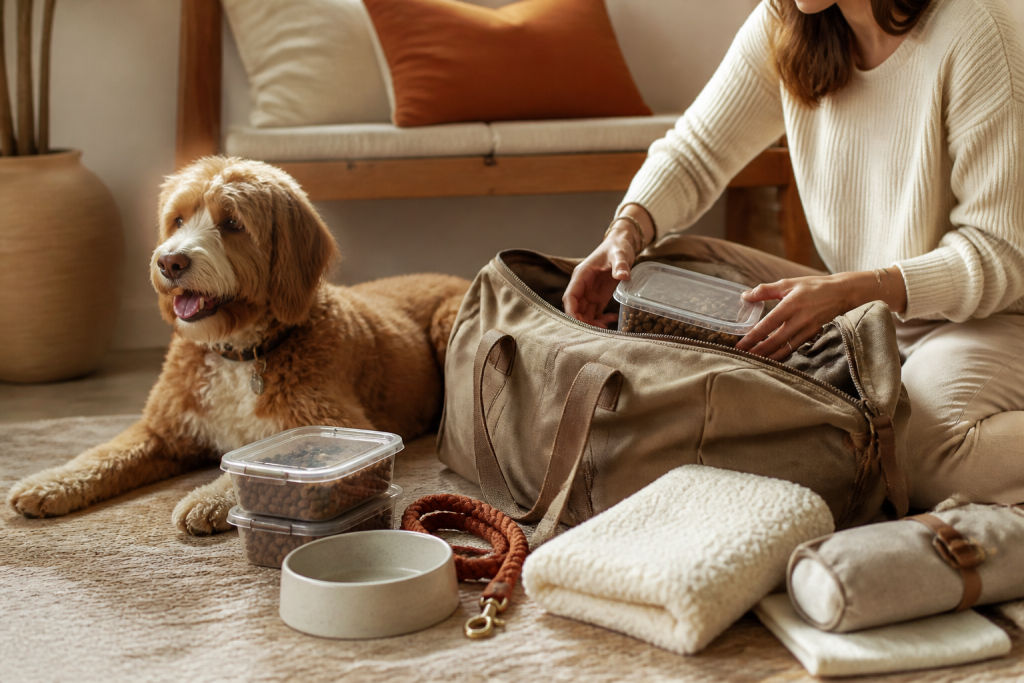
If you move food into another container as part of an arrangement the resort accepts, make the identity and instructions clear. Avoid creating several anonymous portions that can only be recognized by their location in a bag. Label each with the dog’s recorded name and the information the resort requested. The system should remain understandable after the bag is opened and the items are separated.
Ask about opened food explicitly
Different products have different manufacturer instructions after opening. Share those instructions with the team and ask whether the proposed packaging works for the facility. Do not assume that a container can be left open between meals or stored in a particular way.
Confirm how unused portions will be handled and what happens to remaining food at pickup. If the resort asks for a different packing method, clarify that method before preparing the whole stay’s supply. Avoid creating a complicated arrangement that has not been discussed.
Opened wet food needs a plan that follows its product directions and the resort’s accepted storage and handling arrangements. Ask how an opened container would be identified, stored, and used or discarded. Do not infer a storage duration from another product or write an improvised instruction because it is convenient for the trip. If you cannot make the existing product work within the confirmed arrangement, discuss options with the appropriate professionals.
The question is particularly important when one container normally covers more than one meal. Explain that pattern before arrival. Ask whether the team accepts that format or prefers another agreed method. Keep the answer with the feeding note so a last-minute change to package size does not silently alter the plan. A smaller package is not automatically interchangeable with a larger one simply because the label looks similar.
Separate regular food from optional extras
If a medication instruction involves a meal, follow the veterinarian’s directions and ask the resort how those instructions should be documented. Do not hide a medicine in a food container without discussing it or replace its original labelled packaging with a handwritten meal note.
Before departure, read your instructions as if you had never fed your dog before. Any detail that depends on knowing your household habits is worth clarifying. For the rest of the stay supplies, use the existing boarding packing checklist.
Owners sometimes include treats, toppers, and other additions without describing whether they are part of the normal meal. Identify what is essential to the established feeding routine and what is an optional item you are asking about. Confirm whether each is accepted. Do not assume a staff member will know that one packet belongs in dinner while another is intended only for a particular situation.
Avoid introducing holiday leftovers or a new supplement to make the boarding bag feel special. An established diet is easier to communicate than a collection of unfamiliar extras. For any veterinarian-directed restriction, use the current instruction and make it visible. If medication is associated with food, document the medicine through the separate process the resort accepts; do not hide the instruction inside a general treat note.
A worked example of a clear food handoff
Imagine that a dog’s dinner normally includes wet food from a particular labelled container alongside a measured amount of dry food. The owner first writes “half a can with kibble.” Before sending that note, the owner checks the actual container size, identifies the exact dry-food product, and asks how the resort wants the established amounts recorded. The note is then revised to remove the assumptions.
The owner also confirms the accepted packaging and what happens to an opened portion. This example deliberately does not give a serving amount or storage duration. Those details must come from the dog’s existing directions, the product instructions, and the resort’s agreed handling. The improvement is the clarity of the handoff, not a change in what the dog should eat.
Match the supply to the confirmed dates
Ask whether extra food should be included and how an unexpected extension would be managed. The answer may depend on the product, accepted storage, and the length of the stay. Do not assume staff can purchase the same food if the supply runs short.
If your plans change while your dog is boarding, include the food question in the update. The contact page provides the direct route for discussing the stay; an altered airline itinerary does not update food instructions automatically.
Review the arrival and collection dates alongside the feeding arrangement the team has accepted. Ask which meals the resort expects to provide so the supply calculation is based on the actual handoff. A date on a calendar does not by itself tell you whether breakfast or dinner falls before or after collection. Clarify that question instead of adding a guessed number of meals.
Ask whether an extra supply should be included for a possible travel change and how it would be handled. An additional container is not permission to extend the reservation. Similarly, an approved extra night does not prove that enough of the correct food remains. If travel changes during the stay, raise the food question with the team promptly and follow the agreed process for any replacement supply.
Use labels that remain readable
Choose a labelling method that stays attached to the accepted packaging and can be read without opening several containers. The dog’s name should match the booking record. Add the information the resort requests rather than filling every surface with competing notes. If a label is smudged or obscures the manufacturer’s directions, replace it before the handoff.
Read the final set of labels against the written meal note. Check that product names, portion descriptions, and timing agree. If another household member packed the food, review it together. A clear note cannot compensate for a bag containing a different product or package size. The last check is an opportunity to catch ordinary packing mistakes without changing the dog’s diet.
Explain appetite observations without asking for a diagnosis
You may know that your dog usually approaches food slowly or leaves part of a meal. Describe that pattern factually if it is relevant, and ask the team how it shares observations during the stay. Do not write a broad instruction to ignore every change because the dog is “just picky.” A new or concerning change needs the appropriate discussion, and medical questions belong with a veterinarian.
Keep the normal feeding direction easy to distinguish from background information. A caregiver should not have to search through a long story to find what was agreed for dinner. If your veterinarian has provided a specific instruction about a current concern, communicate it through the process the resort accepts. Do not ask boarding staff to invent a treatment response from a meal diary.
Check the return handoff as carefully as arrival
At collection, ask about any feeding question that arose and review the supplies returned. Confirm what belongs to your dog and what instruction should continue at home. Follow the manufacturer’s directions for any remaining product, and ask if an item is unclear rather than assuming it is suitable to use because it came back in the bag.
Update the note while the experience is fresh. If a label was confusing or the resort requested a different packing detail, record it for the next stay. Keep the useful change specific. You do not need a larger document each time; you need the version that accurately describes the food and process you currently use. Remove obsolete instructions so the next handoff starts with one clear plan.
Questions about wet food during boarding
Can I assume wet food is accepted because I bring it from home?
No. Ask the resort about the exact product and packaging before the stay. The team needs to confirm whether the required storage and preparation arrangement can be accommodated.
Is a photograph of the label enough?
Ask what the resort requires. A photograph can support a conversation, but it does not automatically replace original packaging, identification, or written instructions. Supply the information in the form the team accepts.
Should I change to dry food for the trip?
Discuss dietary changes with your veterinarian. First ask the resort whether your dog’s established routine can be accommodated. Do not make an unplanned change solely to simplify packing.
What if a container is a different size from the usual one?
Recheck the written directions before sending it. A phrase such as half a container becomes ambiguous when the package changes. Confirm the established amount and the accepted method for communicating it rather than expecting staff to infer the conversion.
What is the most important detail on the note?
There is no single detail that replaces the others. The useful combination is the dog’s identity, exact food, established amount and timing, accepted storage and packaging, and a reachable contact when something does not match.
Should I change foods to make boarding easier?
Discuss any dietary change with your veterinarian. First ask the resort about your dog’s existing food rather than making an unplanned switch for convenience.