
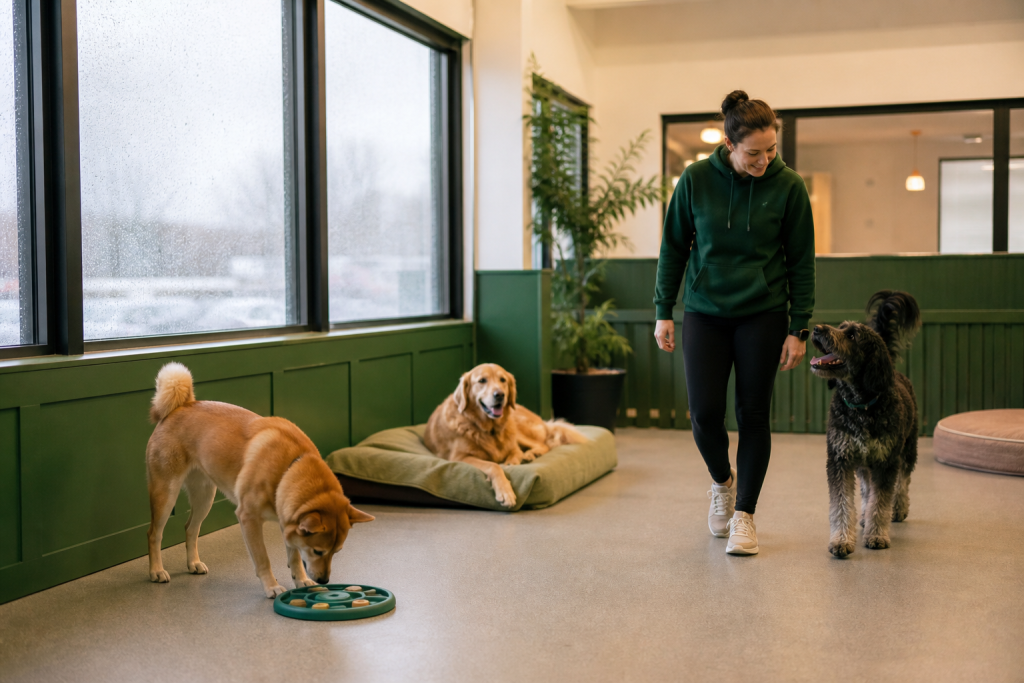
Winter weather can change the trip to daycare even when the care date stays the same. Check the route, allow extra time, and decide who can complete drop-off if traffic or a train delay changes your morning.
Start with the Pet Care Plus daycare information and confirm the current arrival window. An online booking does not remove the need to plan the journey.
Build the plan around confirmed care and real travel
Start with the daycare date and arrival information confirmed by the resort. Then work out the journey from your home, workplace, or other starting point. A route that fits a summer commute may need reconsideration when winter conditions change walking surfaces, parking, or travel time. The plan should reflect the actual trip you can make with your dog, not only the departure time on your work calendar.
Check the collection journey separately. The person dropping off may not be the person returning, and the evening route can differ from the morning one. Keep both names and travel arrangements clear. If the resort needs a specific authorization for another collector, complete that process before relying on the person as your backup. A familiar relative is not automatically part of the booking record.
Decide what would make you contact the resort
Think about the changes that would affect the agreed arrival or collection arrangement. A route closure, an unavailable collector, or a substantial delay may require a conversation. Save the resort’s accepted contact details where you can find them without searching through an old message thread. Do not plan to solve a time-sensitive change through a social-media account unless that is the channel the team has asked you to use.
Keep the message practical: identify your dog, the visit date, what changed, and the question you need answered. A revised estimate is more useful than a message saying only that traffic is bad. Ask which options are available. Do not treat notification of a delay as automatic acceptance of a different arrival, cancellation, or collection arrangement.
Prepare the items you will use at the doorway
Keep a towel or other agreed item available for a wet coat, and label anything that belongs to your dog. Ask the team what it needs before adding supplies. Avoid sending a bag of products with no explanation.
The ASPCA cold-weather guidance recommends drying pets and checking feet after winter walks. Follow your dog’s established care routine and ask a professional about a concern.
Put the lead, accepted outdoor equipment, and any agreed belongings in a consistent place. Check the equipment before leaving rather than discovering a damaged fastening when you are already outside. Follow the manufacturer’s instructions and the advice appropriate to your dog. A winter garment or accessory should not be used merely because it looks suitable in a photograph.
If you bring a towel or another item for the handoff, label it and ask whether the resort wants it. Keep written care information dry and readable. Avoid a bag containing unrelated household items, products, and work papers that obscures what belongs to the dog. A simple, organized kit makes the arrival easier without assuming the resort needs every item you use at home.
Separate walking conditions from a medical judgment
A weather warning may affect whether a daycare day makes sense for your dog, but it does not decide that question for every household. Consider the route, your dog’s comfort, and the care arrangement the team has confirmed.
Notice the surfaces and weather along the route, and follow appropriate care advice for your individual dog. The ASPCA cold-weather guidance linked earlier discusses drying pets and cleaning and drying feet after winter walks. If your dog shows discomfort or you are concerned about an exposure, seek veterinary advice. A commute checklist cannot determine the cause of a painful paw or a change in behaviour.
Do not introduce unfamiliar products or handling techniques simply because the weather changes. Ask the relevant professional what belongs in your dog’s routine. The practical travel plan can include where to pause, which equipment to bring, and whom to call. Medical decisions remain a separate matter for the veterinarian.
Leave a usable margin without promising an exact arrival
Allow time for ordinary transitions: getting the dog ready, reaching transport, parking, and completing the handoff. A route estimate on a phone may not include all those steps. You do not need to predict every minute, but an arrangement that depends on everything happening perfectly is harder to maintain during winter travel.
If your workday has a fixed meeting or deadline, consider how the dog-care journey fits before committing to both. Ask another household member for help only after confirming what they can actually do. Keep the agreed daycare window distinct from your preferred schedule. The team can explain its arrangements; the commute plan needs to fit within what has been confirmed.
Make the backup collector’s job clear
Choose a person who can collect your dog if the route home becomes impossible. Confirm with the resort how that person is authorized and what identification is required. A name in your phone is not the same as a completed pickup arrangement.
Tell the person where to go, when collection is expected, what identification or authorization the resort requires, and where the dog will go afterwards. Confirm transport and the return of belongings. A request to “pick up the dog if I am late” leaves several important decisions unfinished, especially when winter conditions affect the person’s own journey.
Ask whether the person is willing and available for the relevant dates. If their availability changes, update the plan with the resort through its accepted process. Do not assume a backup can pass responsibility to someone else without another discussion. Keep the current collector information easy to find so an old message does not compete with the final arrangement.
A worked example of an evening route change
Imagine an owner who drops a dog off on the way to work. During the afternoon, a transit disruption changes the route home. The owner has a willing family member available, but that person has not yet completed the resort’s collection process. The owner should not simply send the family member to the desk with a screenshot of the booking.
A clearer sequence is to contact the resort, explain the change, ask what authorization is needed, and confirm that the family member can complete the journey. Once the team agrees to the arrangement, the owner shares the final collection details and destination. The example does not establish a particular late-pickup policy. It shows how a backup becomes a confirmed plan rather than a hopeful possibility.
Keep the arrival conversation short and useful
Place wet items in the location the team requests and identify anything that should return home. Keep written care notes dry and readable. If a leash, harness or winter garment needs a particular explanation, discuss it directly; the person receiving your dog should not have to infer how an unfamiliar item works.
At drop-off, provide any current information the team needs and confirm the collection plan. If a longer question has arisen, ask how to discuss it without rushing the handoff. Avoid expecting the person receiving your dog to infer a changed routine from wet equipment or a different arrival time. State the practical difference plainly.
Keep relevant veterinary instructions and care records in the accepted format. A winter travel issue should not become an excuse to omit ordinary preparation. If the dog is returning after a long break, review the current requirements with the team before the visit. The journey and the care record are separate parts of a reliable day.
Check the route again before leaving work
Before leaving home, decide where your dog will dry and rest after pickup. Keep the area clear of wet coats, salt, and outdoor equipment. Do not assume a late arrival at the resort extends collection hours.
Conditions can change during a daycare day. Review the journey before you leave work rather than discovering the problem when collection is already imminent. If the expected arrival will be affected, contact the resort through the agreed route and explain the current estimate. Keep the backup person informed when their help may be needed.
Avoid sending several conflicting updates as every small delay appears. Share material changes clearly and distinguish estimates from confirmed arrangements. Once a new plan is agreed, repeat the important details so everyone is working from the same version. An organized update is more useful than a long series of messages that never identifies who will actually arrive.
Prepare a practical homecoming
The road conditions at collection may differ from the morning journey. Check for closures or transport changes before leaving work and tell the resort if a confirmed pickup plan is affected. Give a realistic estimate and ask which options are available rather than sending a message that presumes a late arrival is accepted.
Keep the backup person’s number available even when the morning trip was uneventful. If you switch collectors, follow the resort’s authorization process and make sure the revised person knows where to go.
Make the dog’s usual rest area available and keep wet outdoor items away from it. Follow the established post-walk care routine and ask the appropriate professional about any concern. If another person collects the dog, tell them where accepted belongings should go and what information needs to be passed back to you.
Do not assume that a late commute means the dog should have an unfamiliar evening routine. Keep care consistent with the advice you already follow where possible. If your household schedule has changed substantially, discuss relevant details with the appropriate provider. The commute plan should support a manageable return home, not end at the resort’s exit.
Learn from delays without rewriting every day
Write down what worked: the departure time, the towel location, the backup contact, and any question the team answered. For a dog returning after a longer break, use the returning-to-daycare checklist as well.
After a difficult journey, note the useful facts. Which part took longer than expected? Was the contact information easy to find? Did the backup person understand the arrangement? Use those observations to improve the next plan. Avoid turning one unusual delay into a rigid rule that every future commute must be organized around the same event.
Review the routine when your workplace, transport, collector, or dog’s needs change. Keep the current version short enough to use. A reliable winter plan does not require constant monitoring or a complicated application. It requires confirmed care, realistic travel arrangements, clear contacts, and a household that knows what to do when the plan needs adjustment.
Questions about winter daycare travel
Does a daycare booking include flexibility for any weather delay?
Do not assume so. Ask the resort how arrival, collection, and changes are handled for your booking. Contact the team when conditions affect the plan and confirm the available options rather than treating the delay as automatic permission.
Can I send a different collector at the last minute?
Discuss the change with the resort and complete its required authorization process. Make sure the person can handle the journey and knows the destination after collection. A forwarded message alone may not establish the arrangement.
Should I bring extra winter equipment to daycare?
Ask what the team accepts and needs. Label relevant belongings and explain any essential instruction. Do not send unfamiliar products or accessories without confirming their role in the care plan.
What if the route becomes unsuitable for my dog?
Consider the actual conditions and your dog’s circumstances, and seek professional advice when a health or welfare concern is involved. Contact the resort about the booking rather than assuming an absent arrival cancels it automatically.
What is worth checking before tomorrow’s trip?
Check the confirmed care date, the route, equipment condition, collector, contact information, and the space available at home after pickup. These are practical checks you can complete without inventing a universal winter routine for every dog.
How should a recurring commute problem be handled?
Describe the actual constraint to the resort and your household. Ask which confirmed arrangements can work, then choose a plan you can repeat. A recurring problem needs a realistic agreement, not a new assumption that the team will extend the same exception indefinitely.
What if the weather closes the route?
Contact the resort and ask which options are available. Do not assume a missed drop-off, late pickup, or cancellation is handled automatically.