
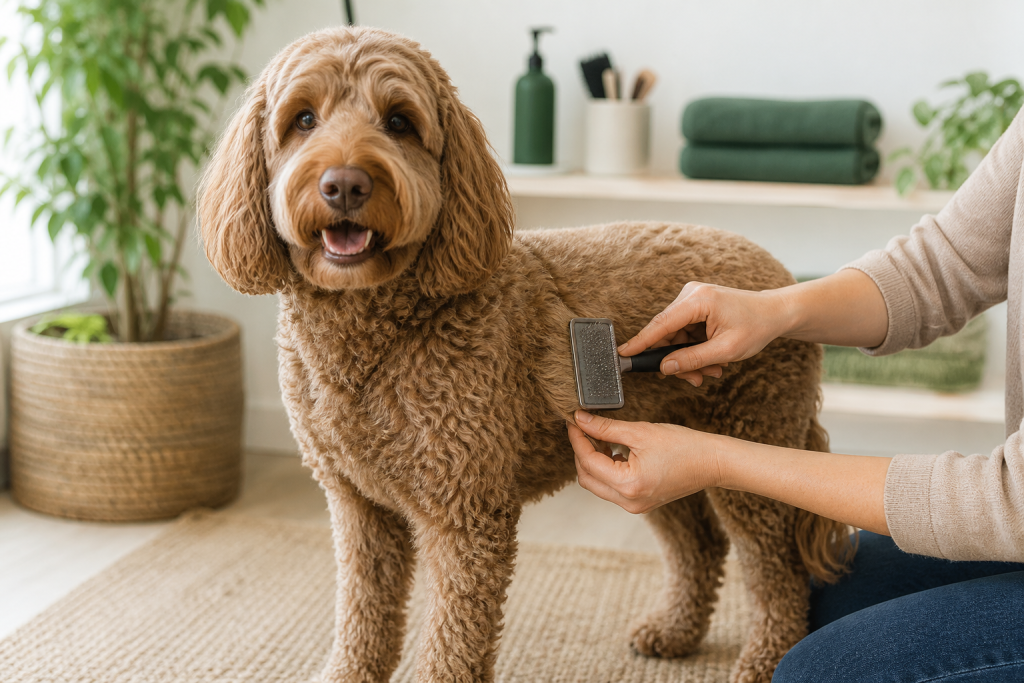
A Practical Routine for a More Manageable Coat
Learning how to prevent dog coat matting between grooming visits can make daily care more comfortable for your dog and help professional appointments go more smoothly. Mats are not simply loose hair resting on top of the coat. They form when strands twist together, hold shed hair, and tighten through movement, moisture, and friction. A short, consistent home routine is usually more useful than waiting for the coat to look tangled and attempting one long brushing session.
The right routine depends on coat type, length, lifestyle, and the grooming plan chosen for your dog. A curly coat may need attention on a different schedule than a short, smooth coat. A dog who wears a harness every day, plays outdoors, or enjoys water may also develop tangles in predictable places. Your groomer can show you which tools and techniques are suitable for your individual dog.
Pet Care Plus offers dog grooming in Chicago for families who want professional coat care supported by a realistic home routine. The goal between visits is not to reproduce a full professional groom. It is to notice changes early, brush gently, keep the coat appropriately dry, and ask for help before tangles become tight or uncomfortable.
Why Dog Coats Mat Between Appointments
Friction is a common starting point. Hair rubs against hair as a dog walks, sleeps, plays, and turns. Collars and harnesses add repeated contact around the neck, chest, and legs. When shed undercoat remains trapped instead of falling away, it can become part of a dense tangle.
Moisture can accelerate the process. Rain, snow, swimming, a bath, or even a damp walk may cause strands to clump. If the coat air-dries without being separated and brushed appropriately, small tangles may tighten. Chicago’s changing weather makes this especially relevant during wet fall walks and winter slush.
Coat length also changes the maintenance requirement. A longer style leaves more hair available to twist together and usually asks more of the home routine. Choosing a manageable length is not a failure or a cosmetic compromise. It can be a practical decision based on the time a family can consistently devote to coat care.
Know the Areas That Need Extra Attention
Mats often begin in places that are easy to miss during a quick brush over the dog’s back. Check behind and below the ears, under the collar, around the chest, in the armpits, along the belly, around the tail, and where a harness rests. Longer facial hair and leg furnishings may also collect moisture and debris.
Use your fingertips gently to feel for changes without pulling. A tangle may feel like a small, denser patch within the coat. Compare it with the surrounding hair. If your dog turns away, guards an area, or shows discomfort, stop and arrange professional guidance rather than forcing the inspection.
Make the check part of an ordinary routine. You might look behind the ears after removing the collar or check the chest and armpits after taking off a harness. A repeatable cue is easier to maintain than relying on memory.
Brush in Sections, Not Only Across the Surface
One of the most common home-care problems is surface brushing. The top of the coat may look smooth while tangles remain closer to the skin. For coats that require it, a groomer may demonstrate line brushing: working through a small section at a time so the tool reaches the appropriate depth without scraping the skin.
Begin only when the dog is calm and the coat is in a suitable condition for brushing. Part a small section, support the hair so you are not pulling the skin, and use gentle strokes in the direction recommended for that coat. Work methodically rather than rapidly. Sensitive areas deserve shorter sessions and lighter handling.
Do not assume that more pressure will produce a better result. A brush is a coat-care tool, not a way to force through resistance. If it catches repeatedly, stop. Tight tangles and mats should be assessed by a professional groomer because pulling, cutting, or working too close to the skin can injure a dog.
Choose Tools for the Dog in Front of You
There is no universal brush that is ideal for every coat. Slicker brushes, pin brushes, combs, and undercoat tools serve different purposes. The size, pin length, spacing, and firmness also matter. A tool that works well for one dog may be ineffective or uncomfortable for another.
Ask your groomer to recommend a small home kit and demonstrate how to hold each tool. A brush may separate and remove loose hair, while a comb can help check whether a section is actually free of tangles. That does not mean a comb should be pulled through resistance. It is a check, not a lever.
Avoid choosing a sharp dematting tool simply because an online video makes the process look fast. Blades can be difficult to see within dense hair, and dog skin can be pulled into a tight mat. Professional assessment is the safer choice when a tangle does not release with gentle, appropriate brushing.
Make Short Sessions Part of the Week
Consistency matters more than turning one evening into a grooming marathon. A few calm minutes focused on one or two areas can be easier for both dog and owner. The ideal frequency varies, so use the schedule recommended by your groomer for the coat style you are maintaining.
Choose a quiet place with stable footing. Let the dog see and sniff the tools, and begin with an area the dog tolerates well. Pause before frustration builds. A session can be useful even if you do not cover the entire body.
Keep expectations realistic for puppies and dogs new to brushing. They may first need to learn that standing still, accepting gentle touch, and hearing tools placed on a table are ordinary parts of care. A patient introduction supports cooperation; restraint and rushed handling can make future sessions harder.
Handle Collars, Harnesses, and Clothing Thoughtfully
Anything that repeatedly rubs the coat can contribute to tangles. Remove a harness when it is not needed, following safe handling practices for your situation, and check the contact areas after use. Make sure collars and clothing fit properly and remain clean and dry.
If your dog wears a sweater or coat in cold weather, inspect the armpits, chest, neck, and belly after removal. Fabric can compress longer hair and add friction during movement. Brushing those areas on a regular schedule may prevent a small knot from becoming a dense mat.
Discuss the dog’s everyday equipment with the groomer. Knowing where straps rest can help the groomer suggest a coat length or home-care focus that fits the dog’s routine. Grooming works best when style and daily life are considered together.
Dry the Coat Carefully After Rain or a Bath
A damp coat should not be ignored, especially when it is long, curly, or dense. After a wet walk, gently blot rather than vigorously rubbing with a towel. Rubbing can move hair in multiple directions and encourage tangling. Pay attention to the chest, belly, feet, ears, and areas under walking gear.
Home bathing adds another layer of responsibility. Products must be suitable for dogs, residue should be rinsed thoroughly, and the coat needs appropriate drying. A coat that feels dry on the surface may still hold moisture deeper down. Ask your groomer whether home baths fit the current coat and how to dry and brush afterward.
Do not use high heat or unfamiliar drying equipment without professional instruction. If frequent baths are necessary because of the dog’s lifestyle, consider whether a professional bath and brush service would provide a more manageable routine.
Keep the Coat Clean Without Overdoing It
Dirt, burrs, and small debris can become caught in longer hair. Check the coat after outdoor time and remove loose material before it works farther into the strands. If something is stuck close to the skin or tangled tightly, let a professional handle it.
More washing is not automatically better. Bath frequency should reflect the dog’s coat, skin, activity, and professional guidance. Overly frequent or poorly rinsed baths may create other problems and still will not replace brushing. Cleanliness and detangling are related, but they are not the same task.
Pet Care Plus provides professional grooming options within its Chicago pet resort. Families can review full-service dog grooming and speak directly with the team about the service that fits the dog’s current coat condition.
Plan Professional Visits Before the Coat Is in Trouble
Waiting until a dog looks overgrown may be too long for the chosen style. Many coats need maintenance on a recurring schedule, but the interval is individual. Ask the groomer when to return based on coat type, haircut, season, and the home routine you can reliably maintain.
Book the next visit before leaving when possible. A predictable schedule reduces the chance that appointment availability will stretch the interval unexpectedly. It also creates regular opportunities for the groomer to notice patterns and adjust the plan.
Be honest about what happened between appointments. If brushing was difficult, the dog went swimming, or a harness area tangled quickly, share that information. The conversation is not about blame. It helps the groomer recommend a more sustainable length, tool, or frequency.
When a Mat Needs Professional Attention
Do not cut a mat with household scissors. Dog skin is flexible and may be drawn up into the tangle where it cannot be seen. Even a careful owner can misjudge the distance between the mat and the skin. Likewise, do not pull repeatedly on a dense area in an attempt to save coat length.
Contact a professional groomer when tangles are tight, widespread, close to the skin, or uncomfortable for the dog. The safest plan may require shortening part or all of the coat. A humane result is more important than preserving a particular style.
Groomers provide grooming services, not veterinary diagnosis or treatment. If the skin looks injured, inflamed, unusually moist, has an odor, or your dog appears painful or unwell, contact your veterinarian. The American Veterinary Medical Association’s pet-care resources can help owners identify the appropriate type of professional guidance.
Prepare Useful Notes for the Groomer
A concise update helps the appointment begin efficiently. Tell the groomer when the last service occurred, what tools you used, which areas were difficult, whether the coat became wet frequently, and how your dog responded to brushing. Mention the everyday collar, harness, or clothing routine.
Ask what can realistically be maintained until the next visit. If you prefer a longer style, confirm the brushing time and appointment frequency it requires. If that routine is not practical, invite the groomer to suggest an easier length.
Photos can help document how quickly a certain area changes, but they do not replace an in-person coat assessment. The team must see and feel the coat before confirming what service can be completed safely.
Build a Routine Your Dog Can Actually Maintain
The best mat-prevention plan is not the most elaborate one. It is the plan the household can repeat without rushing or upsetting the dog. That might mean brief section-by-section brushing, checks after harness use, careful drying after wet walks, and recurring professional appointments.
Keep tools in one accessible place and connect coat checks to an existing habit. Track grooming appointments on the household calendar. If two people share care, agree on who handles each session so the task does not disappear between responsibilities.
For professional support, review Pet Care Plus’s Chicago dog grooming services and use Book Now to select the appropriate customer path. The team can assess the coat at the appointment and discuss a practical next-step routine.
FAQs
How often should I brush my dog to prevent matting?
The correct frequency depends on coat type, length, lifestyle, and haircut. Ask your professional groomer to demonstrate the right tools and provide a schedule for your individual dog rather than relying on a universal timetable.
Where do mats commonly form on dogs?
Common trouble spots include behind the ears, under collars and harnesses, in the armpits, around the chest and belly, on the legs, and near the tail. Friction and moisture make these areas especially important to check.
Can I cut a dog mat out with scissors?
No. Skin can be pulled into a tight mat and may be impossible to see beneath it, making household scissors dangerous. Ask a professional groomer to assess and remove tight mats safely.
Should I brush my dog immediately after a bath?
Bathing and drying methods depend on the coat. Ask your groomer how to brush and fully dry your dog after a home bath. Do not vigorously rub, use high heat, or force a tool through damp tangles.
Will a shorter haircut make home coat care easier?
A shorter style can reduce the amount of daily maintenance for many dogs, although every coat still needs appropriate care. Discuss lifestyle, preferred appearance, and realistic brushing time with your groomer.
How do I book dog grooming at Pet Care Plus?
Use the Pet Care Plus Book Now page and choose the correct new- or existing-customer reservation path. You can also call (312) 397-9077 to discuss current grooming availability.
Conclusion
To prevent dog coat matting, focus on small actions performed consistently: inspect friction areas, brush in appropriate sections, use coat-specific tools, dry wet hair carefully, and keep professional visits on a realistic schedule. Stop when a tangle is tight or your dog is uncomfortable, and let a groomer determine the safest approach. Pet Care Plus can support Chicago families with professional grooming and a home-care plan designed around the dog’s actual coat and routine. Review dog grooming in Chicago or request an appointment to get started.