
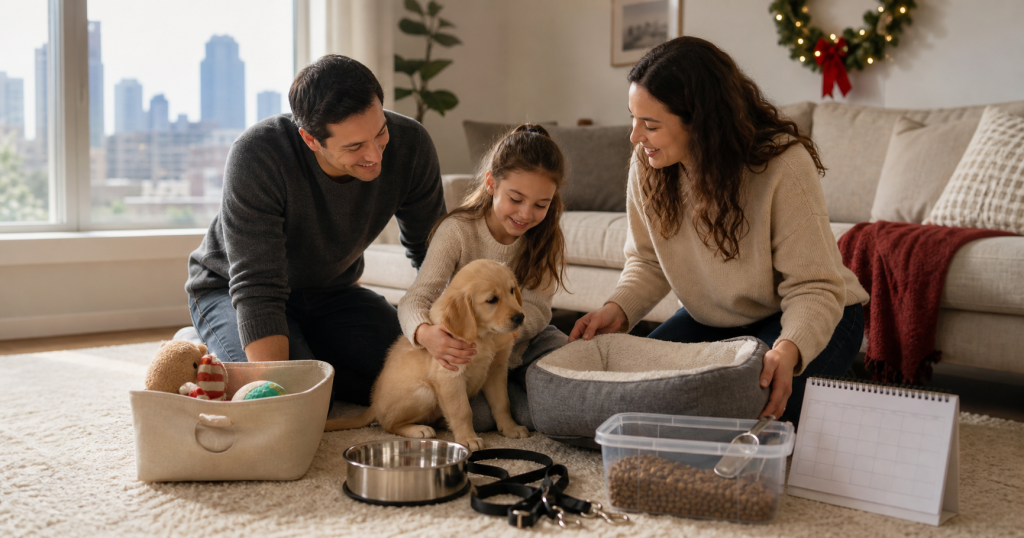
Bringing home a puppy during the holidays is exciting, but the first month works best when the household keeps expectations simple. New sights, visitors, decorations, weather, and schedule changes can overwhelm a young dog. A practical new puppy checklist helps Chicago families create calm routines while still enjoying the season.
Before Your Puppy Arrives
Choose a quiet sleeping area, decide where meals will happen, and agree on the words everyone will use for common cues. Put cleaning supplies, a leash, waste bags, food, and safe chew items where adults can reach them quickly. Puppy-proof rooms by securing cords, medications, food, small decorations, and anything that could be swallowed. A gate or exercise pen can make supervision easier without giving a puppy access to the whole home.
Schedule an introductory veterinary appointment and bring every vaccination and medical record supplied by the breeder, shelter, or rescue. Your veterinarian can help establish an age-appropriate vaccination, parasite-prevention, nutrition, and wellness plan. Ask when your puppy may safely begin group activities, because readiness depends on health history and veterinary guidance.
Days 1?3: Keep the World Small
The first few days should focus on safety and predictability. Show your puppy the sleeping space, water location, and approved potty area. Take frequent, calm potty trips and reward success immediately. Accidents are information, not misbehavior; they usually mean the puppy needed a faster trip outside, closer supervision, or a clearer routine.
Limit introductions to a few people at a time. Allow the puppy to approach instead of being passed from person to person. Short periods of exploration followed by rest are more useful than a full day of excitement. Young puppies sleep often, and an overtired puppy may become mouthy, frantic, or unable to settle.
Days 4?7: Build a Repeatable Routine
Use the same basic rhythm each day: wake up, potty trip, meal, brief play or training, another potty opportunity, and rest. The clock does not need to be exact, but the order should feel familiar. Consistency helps the puppy learn what happens next and helps family members notice changes in appetite, energy, or bathroom habits.
Begin name recognition and simple foundation skills in sessions lasting only a few minutes. Reward the puppy for looking at you, following a lure, coming a short distance, and settling on a mat. Keep the tone light. The goal during week one is not perfect obedience; it is building trust and showing the puppy that paying attention to people is worthwhile.
Week 2: Introduce the Neighborhood Carefully
Chicago brings elevators, traffic, delivery carts, winter clothing, street noise, and many dogs into a puppy’s daily environment. Introduce new experiences at a distance where the puppy can remain comfortable. Pair calm observation with treats or play, and leave before the puppy becomes worried or exhausted. Socialization means creating positive, manageable experiences?not forcing close contact with every person or dog.
Practice wearing a collar or harness indoors before expecting a smooth neighborhood walk. Keep early outings short and let the puppy sniff. Confirm public-ground and dog-contact precautions with your veterinarian until the vaccination series is complete. Controlled exposure can include hearing city sounds from a doorway, watching people from a safe location, or meeting a healthy, appropriate dog under guidance.
Week 3: Practice Short Separations
A puppy should gradually learn that being alone for brief periods is safe. Start after potty, play, and a chance to settle. Step away for a very short interval and return calmly. Increase duration gradually based on the puppy’s response. Avoid making every departure or arrival a major event.
Use a safe confinement area with appropriate enrichment, and never leave a puppy with an item that has not been evaluated for safe unsupervised use. If the puppy shows persistent panic, attempts to escape, or cannot recover, pause the progression and seek guidance from a qualified professional.
Week 4: Expand Skills Without Rushing
By the fourth week, many families can begin combining skills in everyday situations. Ask for a brief pause before opening a door, reward four paws on the floor during greetings, and practice settling while people eat. Continue reinforcing potty habits and supervised chewing choices. Adolescence and developmental changes will still bring setbacks, so treat the first month as a foundation rather than a finished result.
If your veterinarian confirms that group care is appropriate, consider how structured dog daycare in Chicago might fit your puppy’s routine. A good program evaluates temperament, groups dogs thoughtfully, supervises interactions, includes rest, and communicates with pet parents. Daycare should support healthy social development, not simply produce exhaustion.
Holiday Safety for a New Puppy
- Keep chocolate, alcohol, cooked bones, rich foods, and sugar-free products containing xylitol out of reach.
- Secure electrical cords, ribbons, ornaments, batteries, and small toys.
- Give the puppy a quiet retreat during gatherings.
- Keep doors and gates managed when guests arrive.
- Maintain normal meals, potty trips, and rest periods whenever possible.
Ask your veterinarian about any suspected ingestion or sudden health concern. Planning ahead is especially important when holiday hours may affect access to routine services.
Your First-Month Checklist
- Veterinary visit and records reviewed
- Consistent feeding and potty routine
- Safe sleeping and confinement spaces
- Short positive training sessions
- Age-appropriate enrichment and chewing options
- Gradual exposure to Chicago sights and sounds
- Brief, successful separation practice
- A plan for grooming, handling, and nail care
- Emergency veterinary contact information saved
- Family rules that everyone follows consistently
Plan the Next Step
The best first month is calm, supervised, and flexible. Watch the puppy in front of you and adjust the pace when needed. Pet Care Plus can help Chicago families explore age-appropriate care options after veterinary clearance. Review our vaccination requirements and first-visit information, then contact the team with questions about preparing your puppy for future daycare or boarding.