
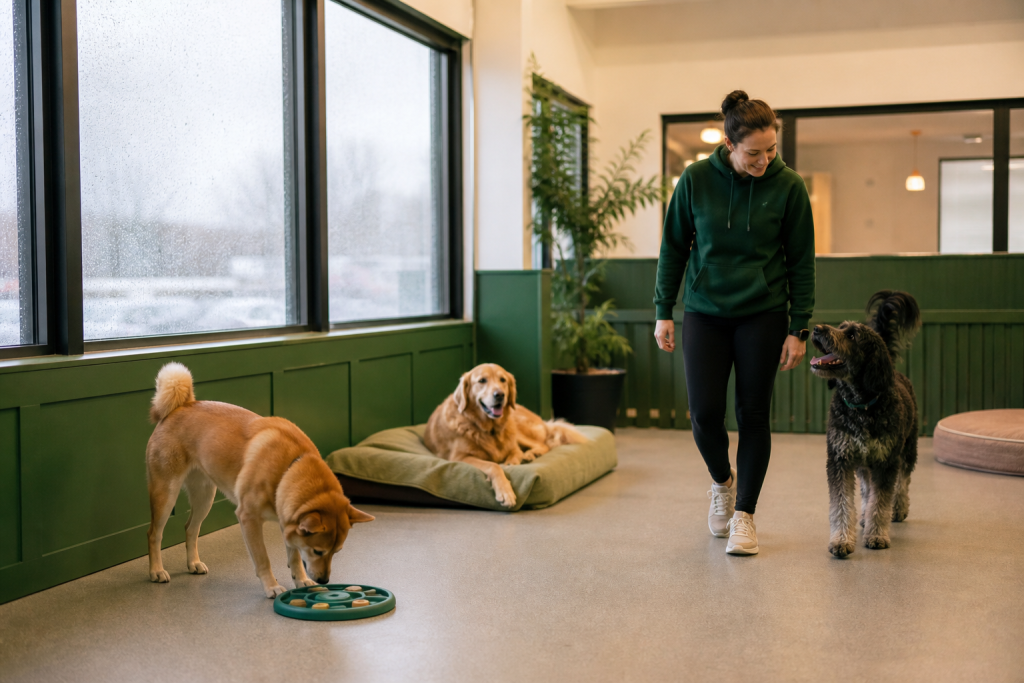
A contractor’s start time can affect more than your morning commute. Open doors, equipment deliveries, and rooms you cannot use may change where your dog can spend the day. If you are considering daycare during a renovation, build the plan around the work that is actually scheduled and your dog’s suitability for the service.
The Pet Care Plus daycare page explains the available care. Speak with the team about your dog’s experience and needs before assuming that a noisy week at home makes any daycare arrangement the right fit.
Separate the building schedule from the care schedule
Identify which days involve sustained noise, frequent arrivals, or restricted access to rooms. A rough project completion date is not enough to plan pet care. You need to know when people are entering the home and whether the daily finish time is likely to change.
Keep the building-work schedule separate from your daycare confirmations. One shows what the contractor expects to do; the other shows what care you have actually arranged. A change to the first should prompt a check of the second.
Home renovation creates two calendars that can influence each other without being the same thing. The contractor’s plan describes noise, deliveries, access restrictions, and people entering the home. The daycare booking describes care that has actually been requested and confirmed. Keep both records visible. A projected completion date is not a daycare reservation, and a daycare day does not make an unfinished room suitable for your dog after pickup.
Ask the contractor to identify the windows that will be most disruptive. “The kitchen will be done next week” is too broad to plan around if the loud work happens on one day and the deliveries on another. Note when doors may remain open, when unfamiliar people will arrive, and whether materials or tools will be left in areas your dog normally uses. You are gathering practical information, not asking the contractor to decide what pet care is appropriate.
Think about the morning and evening separately
Check current drop-off and pickup hours alongside your work commitments. Decide who will take your dog to daycare and who can collect them if you need to remain at home for a delivery or inspection.
Do not assume that a contractor finishing late extends daycare collection hours. Arrange a backup that the resort has accepted, and confirm any authorization needed if someone else may collect your dog.
The morning journey may be calm while the collection journey is affected by a late inspection or delivery. Plan both. Check the daycare arrival and collection information the resort has provided, then compare it with your workday and the contractor’s access plan. Do not assume that a contractor running late extends daycare hours or that a neighbour can collect your dog without completing the resort’s accepted authorization process.
Write down who will take your dog, who can collect if the plan changes, and where your dog will spend the evening. If another adult helps, tell them which details are confirmed and which need a call. A backup person who has not been approved or who cannot reach the home is not a finished backup plan. Confirm the practical handoff before relying on it.
Check the home’s safe usable space
Before collecting your dog, establish which parts of the home are available for use. Ask the contractor about unfinished surfaces, stored products, tools, and access restrictions. Follow the relevant professional instructions for the work being done rather than guessing when an area is ready.
- Where will your dog rest after pickup?
- Can food, water, and normal belongings be kept outside the work area?
- Who will keep doors secure during evening deliveries?
- What is the alternative if the home is not ready that night?
- Which care booking needs a separate confirmation if the project changes?
Daycare solves a daytime care question; it does not certify a construction area for pets. Before pickup, ask the contractor what surfaces, products, tools, and access points remain in use. Follow the instructions that apply to the work. Keep your dog away from any area that has not been cleared by the responsible professional. Do not decide that a room is ready simply because the visible work has stopped.
Choose a temporary rest, food, and water area outside the work zone. Secure doors and gates, and move bags or equipment that could be reached by a curious dog. If the home cannot provide a suitable place after pickup, contact the people responsible for the project and the care arrangement before the day begins. A late discovery creates more pressure than a realistic alternative planned in advance.
Tell the daycare team what changed
Explain that your household routine is temporarily different. Mention practical changes such as unfamiliar pickup arrangements or a different morning journey. Describe what you have observed in your dog rather than asking daycare to solve a behavior or medical concern.
If your dog is new to the resort, ask about the usual first-visit process and current requirements. Construction deadlines should not be used to skip preparation. If your dog has not attended recently, review the returning-to-daycare checklist.
The team does not need the contractor’s entire scope of work. It does need relevant facts that affect the care conversation. Explain that your dog’s route, collector, or home routine may differ. Mention a changed harness, a different person at pickup, or a request that the dog return with a towel if those details are accepted and important. Describe what you observe rather than asking daycare staff to diagnose a reaction to construction noise.
If your dog has not attended recently, review the current first-visit or returning-client requirements. A renovation does not remove the need to keep records and arrangements current. Ask how to communicate a late change and write down the answer. Use the resort’s accepted channel so a message in a contractor group chat does not become the only notice about your dog.
Keep renovation materials out of the care bag
It is easy for a temporary household plan to turn into a bag containing tools, samples, paint information, and pet supplies mixed together. Keep your dog’s accepted belongings separate and label anything the daycare team should receive. Do not send unfamiliar products for a staff member to identify or use. If you think your dog needs a specific item because the home is being renovated, ask whether it is appropriate and accepted before packing it.
Check the bag at the end of each day. Replace wet items and remove objects that no longer belong with the dog. Keep written care instructions readable and current. If a home project changes the time you can provide a meal or routine activity after pickup, explain the change to the right professional instead of expecting daycare to infer it from the renovation schedule.
Use one simple update when the project moves
Renovations often have quiet days as well as disruptive ones. Revisit the care dates when the contractor changes the sequence of work, and discuss your dog’s experience with the daycare team. The useful outcome is a coordinated household plan, not a fixed attendance pattern chosen before the project is understood.
Request care through the daycare booking option and confirm availability for the dates you need. Keep the resort’s contact information separate from your contractor group chat so updates reach the right people.
Renovations change order and timing. When a contractor moves a disruptive window, review the daycare date rather than assuming the existing booking still solves the new problem. Tell the daycare team the practical effect: the door will be open at collection, the usual person is unavailable, or the home will not be ready until a later time. Ask which options are available and record the confirmed answer.
Avoid sending several partial messages that leave different possibilities in circulation. A useful update includes the dog’s name, the visit date, what changed, and the question you need answered. If the project returns to the original schedule, update the care plan again. The goal is an accurate current record, not a long chain of abandoned scenarios.
A worked renovation example
Imagine that a family schedules two daycare days while a bathroom is being renovated. On the first day, the contractor expects a quiet inspection after pickup. On the second, the team now plans to remove a door near the dog’s usual resting area. The family initially treats both days as the same, but the second day needs a different evening plan.
The family tells daycare that the collector and home route may change, asks the contractor what areas remain restricted, and decides where the dog will rest after the second pickup. If the home cannot provide an appropriate space, they ask the relevant people about another arrangement before the date. The example does not establish that any specific late pickup, extra daycare period, or alternate accommodation exists. It shows why the care plan should follow the actual work rather than the original project estimate.
Coordinate visitors without creating a new behaviour plan
Contractors may ask the dog owner to keep the dog away from an open door or delivery path. Follow the instructions that belong to the worksite and your household. Do not expect daycare staff to solve a home access problem that occurs after pickup. Tell the team what your dog has experienced and ask a qualified professional about a significant behaviour or health concern.
At home, use the routine your dog already understands where possible. A renovation may be the wrong time to introduce several new rules, products, and routes at once. If a change is unavoidable, make it clear to the people involved in the evening handoff. A consistent simple plan is easier for everyone to follow than a new system that exists only in one person’s head.
Plan the collection route in winter weather
Renovation disruptions and winter travel can combine. Check the route before leaving work and allow time for an altered entrance, temporary parking restriction, or traffic around a delivery. Do not ask your dog to wait in a vehicle while you resolve a home access issue. If you are delayed, contact the resort using the accepted route and ask what options apply rather than announcing that a late arrival is automatically fine.
If the dog comes home damp or has walked through debris near the project, follow the established care routine. Do not apply an unfamiliar product because the dog crossed a dusty area. Ask the appropriate professional about a concern involving skin, paws, or possible ingestion. The renovation calendar can explain exposure; it cannot diagnose its effect.
Make the dog’s return predictable
Choose the entry door, rest area, and water location before collection. Move construction equipment out of the route or ask the contractor to secure it according to the project instructions. Keep family members from crowding the dog while you are also trying to discuss work. A calm return can be as simple as giving the dog a known place to settle while the adults handle the renovation update separately.
If the planned area changes during the day, tell the collector before they leave the resort. A person who does not know the new route may arrive at an unsuitable entrance. Share a brief written note with everyone who may help. Include what is confirmed, what remains off-limits, and who answers questions about the construction. Do not ask the daycare team to make decisions about the building work.
Review the plan after the contractor leaves
At the end of a work phase, record what was practical. Did the collection route work? Was the temporary resting area clear? Did the dog have a predictable evening? Note questions to ask before the next phase. Keep the record focused on observations rather than assumptions about why the dog acted a certain way.
When the project moves into a different type of work, start the review again. A demolition day, a painting day, and a quiet finishing day can create different home conditions. You do not need a new daycare decision for every minor change, but you do need to check whether the existing arrangement still fits the facts. Contact the team when it does not.
Questions about daycare during renovation
Should I book daycare for every construction day?
Not automatically. Consider the disruptive work, your dog’s fit for daycare, the route, and the space available before and after collection. Discuss dates and current requirements with the team. A renovation schedule alone does not determine the right care arrangement.
Can a contractor collect my dog?
Do not assume so. Collection by another person requires the resort’s accepted authorization process. A contractor’s access to your home does not make that person an approved pet collector.
What if construction runs late?
Contact the daycare team and ask which options are available. Do not treat a late contractor or a late pickup as automatically accepted. Give the current estimate and explain what decision you need.
Should I send a calming product in my dog’s bag?
Ask the appropriate professional and the resort before using or packing anything unfamiliar. Do not introduce a product or supplement based only on a construction concern or another owner’s recommendation.
When should I review the arrangement?
Review it when the work sequence, access, collector, route, or evening space changes. You can keep the care date while updating the practical plan. The useful record reflects the current phase of the project.
Does daycare replace a plan for the home itself?
No. You still need an appropriate place for your dog before drop-off, after pickup, and on days without confirmed care.