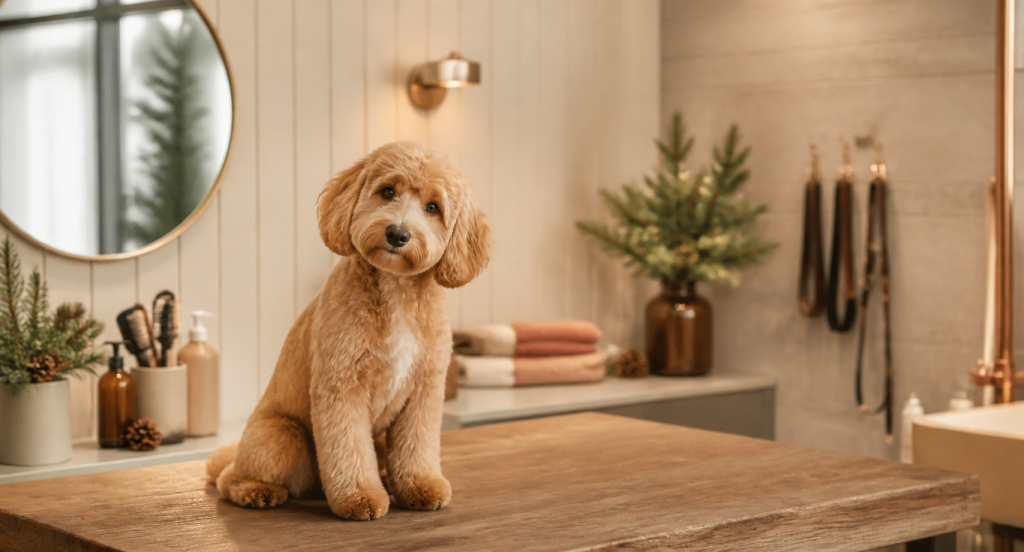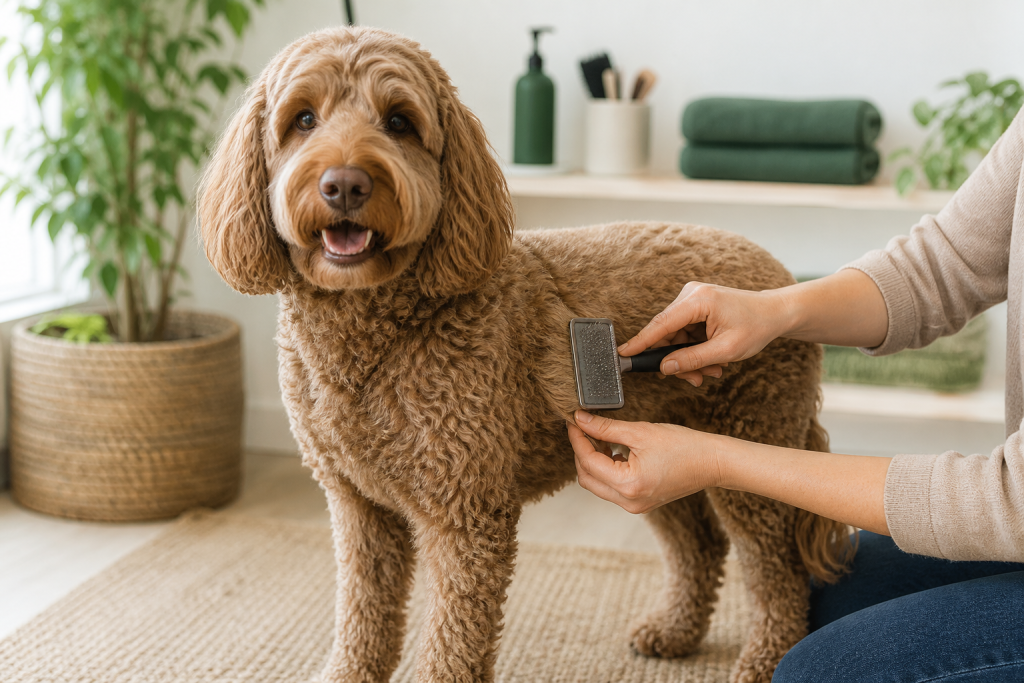
A photo can make a grooming conversation easier, especially when words such as fluffy, tidy, or short mean different things to different people. The photo is most useful when you can explain what you like about it and discuss whether those features suit your dog’s coat and current condition.
Before arranging dog grooming at Pet Care Plus, gather a small set of useful references. A clear example and a few notes usually communicate more than a folder of unrelated styles.
Choose photographs that answer a particular question
Start with the part of the haircut you find difficult to describe. Perhaps you like a softer outline around the face, want the feet easier to maintain, or are unsure what you mean when you ask for a shorter body. Choose photographs that help discuss those specific features. An image can be attractive without being useful for the decision in front of you.
Limit the first selection to a few clear examples. If each photograph shows a different style, the groomer has to discover which one represents your actual preference. Add a short note to each example: “I like the shape around the ears” or “This is the amount of hair around the feet I want to discuss.” Those notes should describe a preference rather than require a result that has not yet been assessed on your dog.
Compare the coat before comparing the outline
A haircut that looks one way on a dense, curly coat may look different on a fine or straighter coat. The photographed dog’s proportions, coat condition, and natural growth also affect the result. Use the image to begin a conversation about what translates to your dog. Do not assume that two dogs described with the same breed or crossbreed label have identical coats.
Ask the groomer to explain which parts of the reference are useful and which are unlikely to look the same. That explanation can help you choose between several preferences. You might discover that the feature you love comes mainly from the other dog’s coat texture or the angle of the photograph. Understanding that distinction early is easier than waiting until collection to discuss why the pictures do not match.
Use a small set of ordinary views
A front view helps discuss the face, while a clear side view can show the body outline and legs. A photograph of the feet or ears may help when that is the feature you are asking about. The images do not need elaborate staging. Ordinary light, an unobstructed view, and a dog standing or sitting naturally often communicate more than a heavily edited portrait.
Avoid forcing your dog into a pose for the sake of a reference. Use photographs you can take comfortably and tell the groomer what the picture does not show. A blurred or partial image can still prompt a question, but it should not become the only source of information. The in-person coat assessment remains essential, even when you have supplied clear photographs in advance.
Recognize when the photograph is doing extra work
Look at the coat rather than the lighting, pose, accessories, or background. Identify the feature you want to discuss: the face shape, the length around the feet, the ears, or the overall outline. A glamorous photograph may be appealing without showing the haircut clearly.
Include a view where the dog is standing naturally if possible. If the reference shows only a face, it cannot explain the body length. Tell the groomer which part of the example matters and which parts you are not asking to copy.
Lighting can hide uneven texture or make a coat appear fuller. A filter can soften detail, and a camera angle can change how long legs or ears appear. Accessories may draw attention away from the haircut. Before saving a picture, ask whether you can actually see the part you want to discuss or whether you mainly like the overall mood of the image.
Images generated or heavily altered digitally can also depict coat shapes that are not a practical haircut reference. If you are unsure about an image, describe the feature you like and ask whether it is realistic. You do not need to identify every editing technique. You need to avoid treating a polished picture as proof that the same result is appropriate or achievable for your dog.
Bring the history of your own dog’s coat
A current photo helps establish the starting point before the appointment. Take it in ordinary light so the coat and outline are visible. Avoid filters that soften tangles or change color and texture. The groomer still needs to assess the actual dog; the photo does not replace that assessment.
If you have a photograph of a previous haircut you liked, include its approximate date. Explain what worked well at home and what you would change. Your own dog’s previous result can be more informative than a reference featuring a very different coat.
A previous photograph of your dog can be especially useful because it shows an actual result on that animal. Add the approximate date and explain what happened as the coat grew out. Perhaps the shape looked good initially but became difficult around the harness, or the feet collected debris more quickly than you expected. Those observations connect the appearance to everyday care.
If you liked a previous groom, say which details worked instead of asking for “exactly the same” without context. Your dog’s coat, condition, comfort, or home routine may have changed. The groomer needs the current starting point as well as the reference. A recent ordinary photograph and an older preferred result can work together when each is clearly labelled.
Describe dislikes without using vague length words
- One feature you particularly like.
- One feature you would prefer to avoid.
- Any area you find difficult to maintain.
- How much brushing you can realistically manage.
- Whether the reference shows a result previously achieved on your dog.
For example, say that you like the rounded face in one image but prefer the simpler feet in another. Ask whether that combination is appropriate. This leaves room for the groomer’s assessment rather than treating the picture as an exact specification that must be reproduced.
Words such as short, fluffy, natural, and tidy are personal. Two people can agree on the word while imagining different results. If there is a feature you want to avoid, identify it plainly: an outline you find hard to maintain, hair that obscures your view of a particular area, or a shape that did not suit your preferences last time. Ask how the groomer would describe the alternatives.
Avoid assigning a tool setting or measurement based solely on an online image. Those details require professional interpretation of the coat and the requested service. Your role is to communicate the goal and the home-care reality. The groomer’s role includes explaining what can be considered after assessment. A clear preference is useful; an unfamiliar technical specification can create confusion if neither person confirms what it means.
A worked example: two pictures, one agreed priority
Imagine that a dog owner brings a photograph with a rounded face and another with a simpler body outline. The owner likes both, but the first image also shows long legs and ears that would require more home maintenance than the household can manage. Without notes, the two photographs could look like competing instructions for an entire haircut.
A more useful conversation identifies the priorities: discuss the first image’s face shape, use the second image to explain the preferred body outline, and ask what suits the present coat. The owner also describes the brushing routine that actually happens at home. The final agreement may differ from both photographs. That is not a failure of the references; it means the pictures helped the owner and groomer reach a more practical plan.
Ask how a change of plan will be discussed
Ask the groomer to explain what is feasible with the present coat, what requires further discussion, and how you will be contacted if the plan needs changing. Do not assume that a breed label or a reference image communicates every detail of the appointment.
The ASPCA’s grooming guidance notes that home brushing needs depend on coat type. Ask what maintenance the proposed style would involve so the appearance and the care routine make sense together.
A photograph cannot reveal every tangle, sensitive area, or handling difficulty. Before the appointment proceeds, ask how the groomer will contact you if the coat assessment changes what can reasonably be done. Give a reachable number and clarify which questions should be discussed. Do not assume that sending several photographs gives the team an answer to every possible decision.
Explain any concern you already know about. If brushing has become uncomfortable or you have noticed an unusual skin change, say so and involve your veterinarian where appropriate. Do not ask the groomer to preserve a requested look at the expense of addressing a problem professionally. Reference photos should support communication, not replace attention to the dog in front of the team.
Connect the preferred style to a real care routine
Discuss who will do the brushing, which tools you know how to use, and where the routine becomes difficult. Be honest about the time available. A style that depends on a maintenance pattern you cannot repeat may not suit the household, even if it looks appealing in a photograph. Ask the groomer to explain the care involved in the option being considered.
Keep this conversation focused on the reference decision rather than trying to learn an entire grooming technique during check-in. If you need guidance with a tool or a particular area, ask how to arrange that explanation. For health concerns, seek veterinary advice. The useful outcome is an agreed appearance with a manageable follow-up routine, not a photograph that silently commits you to care you do not understand.
Send images through the route the team accepts
Ask whether the groomer prefers images before the appointment or at check-in, and use the channel the team gives you. A picture sent to a general social-media account may not reach the person handling your dog. Include the dog’s name and appointment context so the image can be matched to the correct conversation. Avoid sending an unexplained collection from several accounts.
If you change your mind after sending a reference, make the update explicit. Identify which image or feature is being replaced. Keep the final selection together so an older message does not compete with the current preference. The aim is not to build a large image archive for the staff to interpret; it is to make the agreed reference easy to find.
Create a useful record after the appointment
After the appointment, take a straightforward photograph if you want to remember the result. Record which details you liked while they are fresh. Over several visits, a small history of your own dog’s haircuts is easier to use than starting with a new collection of online examples each time.
Use the grooming booking option to arrange a visit, and ask the team how it prefers to receive reference photos. Send the selected images through that route rather than assuming an attachment in an unrelated message will reach the groomer.
Take a simple photograph of the result if your dog is comfortable with the process. A front and side view in ordinary light can help the next conversation. Record the date and a few observations about the style. Then revisit the note after living with it: which areas stayed manageable, what you liked, and what you would ask about next time.
Keep appearance preferences separate from health observations. If a concern develops, contact the appropriate professional rather than waiting for the next haircut discussion. When you do return for grooming, bring the concise record. A history based on your own dog’s results can be more helpful than repeatedly replacing the reference with an unrelated online trend.
Questions about bringing haircut photographs
How many reference pictures should I bring?
Bring a small selection that communicates distinct features. There is no useful universal number, but each picture should have a purpose. If you cannot explain why an image is included, remove it from the initial discussion and keep the conversation focused.
Can I combine features from several dogs?
You can ask whether that combination is appropriate. Identify the feature from each photograph and let the groomer assess how those preferences relate to your dog’s coat and condition. A collage of preferred details does not guarantee that every element can be reproduced together.
Is a photograph better than describing what I want?
The two work best together. The photograph shows an example, while your explanation identifies which part matters. Tell the groomer about maintenance, previous results, and current concerns so the image does not have to carry information it cannot show.
What if I only know what I do not like?
That is still useful information when you describe the feature clearly. Explain the practical problem or visual preference, then ask which options can be considered. You do not have to know grooming terminology before starting the conversation.
What should I save for the next appointment?
Save a clear image of your own dog’s result, the date, and a short note about how the style worked at home. Update the note when your preferences or care routine change. A small, accurate record is easier to use than a large folder of unexplained pictures.
Can a reference photo guarantee the same result?
No. Treat it as a communication aid. Coat type, condition, comfort, and the groomer’s assessment affect what can reasonably be planned.