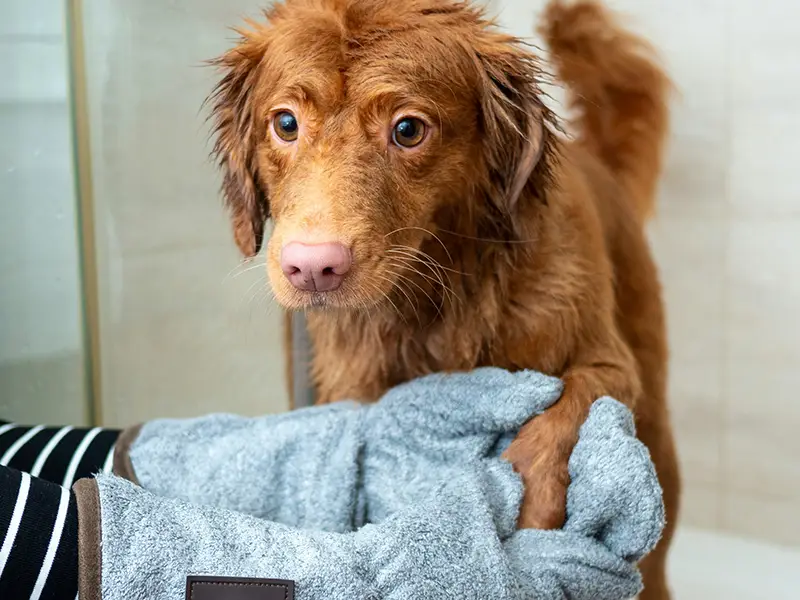
A short walk through wet Chicago weather can leave moisture and street residue on a dog’s coat and paws. Set up an uncomplicated arrival routine so you can deal with what came home from the walk before your dog settles onto bedding.
The ASPCA’s cold-weather guidance recommends towel drying pets when they come inside and cleaning and drying feet after winter walks. The details of coat care should still suit your individual dog.
Make the first few minutes indoors easy to manage
Keep a suitable clean towel and the items you normally use within reach. Choose a place where your dog can stand comfortably while you remove outdoor equipment. A planned spot is easier than moving a wet dog through several rooms while searching for supplies.
If several people walk your dog, agree on the same basic routine. Make sure everyone knows which equipment belongs to the dog and which products, if any, have actually been recommended. An unlabeled bottle beside the door should not become an assumed grooming product.
Before leaving for a walk, choose where you will pause when you return. Keep a clean towel and the equipment you normally use within reach. The space should let your dog stand comfortably while you remove outdoor items and notice where moisture or debris collected. Avoid balancing supplies on a stair or moving a wet dog through several rooms while searching for what you need.
If several household members walk the dog, agree on the same basic arrival routine. Each person should know where towels go, how wet equipment is stored, and which concerns need a professional conversation. A shared plan prevents the dog from returning to damp bedding because everyone assumed someone else had dealt with the wet coat. It also makes the routine easier to repeat on an ordinary workday.
Look at the coat in the context of the walk
Look at paws, the lower coat, and areas covered by outdoor clothing or a harness. Remove the outdoor items so you can assess what is underneath. Follow your dog’s established handling routine and do not force inspection of an area that appears painful.
The ASPCA specifically highlights removing winter salt and chemicals from feet and the stomach area after a walk. Ask your veterinarian about a concern involving skin, paws, or possible ingestion. Persistent licking or discomfort is a reason to seek advice, not simply to repeat cleaning indefinitely.
Think about the surfaces and conditions your dog encountered. Rain, slush, muddy verges, and treated sidewalks can leave different material on the coat and paws. You do not need to identify every substance by sight. If you are concerned about an exposure, keep the relevant product or location information available and seek professional advice rather than applying an improvised cleaning solution.
The ASPCA guidance linked earlier recommends cleaning and drying feet and checking areas where winter salt or chemicals may collect. Follow advice appropriate to your dog and stop handling that causes discomfort. A dog licking one area repeatedly or reacting to touch needs a more specific question than “how do I dry the coat faster?” Describe what you see and let the appropriate professional assess the concern.
Remove outdoor items so you can assess beneath them
Allow wet coats, harnesses, and towels to dry as their care instructions recommend. Check for trapped debris before using them again. Reusing damp equipment can make it difficult to tell whether the dog’s coat is getting wet on the next walk or never dried from the last one.
Keep the routine brief and repeatable. If you need help matching a grooming appointment to the coat’s condition, use the grooming booking option or speak with the team before selecting a service.
A coat, harness, or other outdoor item can conceal damp hair or trapped debris. Remove equipment according to its instructions and your dog’s familiar handling routine. Check the items themselves before putting them away. If something has become damaged, uncomfortable, or difficult to use, address that before the next outing rather than treating it as an unavoidable part of winter.
Follow the manufacturer’s care instructions for drying and cleaning equipment. Do not use a product intended for the item directly on the dog unless it is specifically appropriate and recommended. Keep the equipment where it can dry as directed, and make sure another family member knows which items are ready to use. A damp garment left beside the lead can be mistaken for the next walk’s prepared kit.
Ask about drying for the actual coat
A towel routine that works for a short coat may not answer every question for a dense or long coat. Ask the groomer how to manage your dog’s coat at home and which areas deserve attention. Do not introduce unfamiliar heated equipment or an aggressive brushing session to speed things up.
- Which areas tend to stay damp?
- How should the coat be handled while drying?
- Which tool, if any, belongs in the routine?
- What should prompt a grooming appointment?
- Which concern needs veterinary advice instead?
Short, long, dense, curly, and mixed coats can create different practical questions. Tell your groomer which areas seem to stay damp and what you currently do after a walk. Ask how the coat should be handled at home and whether any technique needs demonstration. Do not assume that another dog’s routine applies because the two animals look similar in a photograph.
Avoid using unfamiliar heated equipment or changing its settings in an attempt to finish faster. If a towel routine is not answering the problem, ask for guidance. The goal is appropriate coat care, not simply making the surface feel dry while the underlying situation remains unclear. A groomer can discuss grooming technique; pain, skin changes, or suspected exposure belong with a veterinarian.
Distinguish surface moisture from a tangle problem
The ASPCA advises limiting bathing during cold spells and discussing appropriate products with a veterinarian when bathing is needed. Avoid turning every muddy outing into a full wash without considering your dog’s coat and the advice you have received.
If the coat becomes difficult to manage, describe the actual problem to the Pet Care Plus grooming team. Explain the weather exposure, what you do at home, and where the difficulty occurs. That information is more useful than requesting a different service solely because it is winter.
A damp coat may reveal an area that was already difficult to maintain. Do not pull through it aggressively or assume that another bath will solve the difficulty. Tell the groomer where you notice the problem and what handling your dog tolerates. Ask what should happen before you attempt a new tool or procedure at home.
Keep the observation specific. “The hair behind the harness stays damp and catches when I try to check it” is more useful than “winter ruined the coat.” The first statement identifies an area and an experience; the second adds an explanation that may not be established. Clear observations make it easier to decide whether the next conversation concerns ordinary grooming or a health concern.
Keep cleaning products identifiable
Store products in their original packaging where possible and make sure the person using them knows what they are for. An unlabelled bottle by the door can lead to an assumption that it belongs in the dog’s routine. Do not transfer household cleaning products into containers that resemble pet-care supplies or mix products to create a winter shortcut.
If a veterinarian or groomer recommends an item, follow the relevant instructions and ask about anything you do not understand. Keep the advice with the product so another caregiver does not improvise. When a product changes, remove the outdated instruction from the shared routine. A simple, understood arrangement is more useful than a large collection of products bought in response to different online suggestions.
A worked example after a slushy walk
Imagine that a dog returns from an evening walk wearing a wet outdoor coat. The owner removes the coat, follows the established towel and foot-care routine, and notices that one area beneath the harness remains difficult to manage. Instead of adding heat or brushing harder, the owner records the specific area and asks the groomer about an appropriate coat-care approach. If the area seems painful or the dog persistently attends to it, the owner contacts the veterinarian.
The outdoor coat is cleaned and dried according to its instructions, and the household notes that it should not be reused while still damp. The example does not prescribe a treatment or diagnose the cause of the difficulty. It shows how the dog’s coat, the equipment, and the professional question can be handled as separate parts of the same return-home routine.
Check where the dog will rest next
After the arrival routine, make sure the dog’s ordinary resting area is ready. Replace a wet towel or damp covering rather than leaving it where the dog is expected to settle. Keep outdoor products and equipment away from the resting area. If your dog has a particular veterinary instruction about skin, mobility, or another concern, follow that guidance when arranging the space.
Avoid turning the return into an extended handling session merely because the weather was unpleasant. Do what is appropriate, then give your dog the familiar opportunity to rest. If the coat requires attention beyond the routine you understand, ask for help. The objective is a repeatable household process, not a perfect-looking coat immediately after every wet outing.
Use grooming appointments to answer a recurring problem
When the same issue appears after several walks, bring the pattern to the grooming conversation. Explain the route conditions, the equipment used, the home routine, and the area that concerns you. A recent photograph may help identify the location if it can be taken comfortably, but the groomer still needs to assess the actual coat.
Ask whether the current style or home-care approach should be reconsidered. Do not select a service solely because its name sounds suitable for winter. Different services address different grooming needs, and the professional assessment matters. Keep veterinary concerns distinct so a recurring painful area is not treated as an ordinary style preference.
Plan for walks when someone else is responsible
Share a short version of the established routine with a family member or other caregiver. Identify the towel, the accepted products, the outdoor equipment, and the contact information to use if something seems wrong. Explain what the person should avoid trying without advice. Do not assume they know a routine that has developed gradually in your household.
Ask the person to tell you about a practical difficulty rather than quietly improvising. If the dog would not tolerate a particular step or equipment was damaged, that information should be passed on. Keep the conversation factual and update the plan when needed. Continuity is easier when the routine is understandable to someone other than the person who invented it.
Review the routine as conditions change
Winter is not one fixed set of conditions. A rainy day, a dry cold day, and a slushy commute may create different questions. Adjust the practical preparation to what you encounter while keeping professional instructions consistent. If a change in the dog’s coat or health affects the routine, seek the appropriate advice rather than assuming weather explains everything.
Periodically check towels, equipment, and product labels. Replace damaged items and remove products that no longer belong in the plan. A well-organized doorway routine does not require a large collection of accessories. It requires the right items, clear instructions, and attention to the individual dog. That is more useful than buying a new winter product every time the forecast changes.
Questions after wet winter walks
Does a wet coat always need shampoo?
No. Follow the advice appropriate to your dog’s coat and the situation. The ASPCA’s cold-weather guidance advises limiting bathing during cold spells and consulting a veterinarian about products when bathing is needed. A wet walk alone does not establish a need for another full bath.
Can I use heat to finish drying quickly?
Ask the groomer how to dry your dog’s particular coat at home. Do not introduce unfamiliar heated equipment or settings without guidance. Faster drying is not the only consideration when handling an animal’s coat and skin.
What if the dog keeps licking a paw?
Describe the behaviour and seek veterinary advice about the concern. Do not repeatedly apply products or continue uncomfortable handling while assuming it is ordinary winter residue. Keep relevant exposure information available.
Should wet harnesses go straight back on?
Follow the equipment manufacturer’s instructions for cleaning, drying, and use. Check for trapped debris or damage before the next outing. A wet item should not be mistaken for a prepared part of the next walk’s kit.
What should I tell the groomer?
Explain the coat area, what happens after walks, the equipment used, and the routine you follow. Specific observations help the team discuss an appropriate grooming approach. Bring health concerns to the veterinarian rather than asking a grooming appointment to diagnose them.
What if a paw looks sore after a walk?
Stop any handling that causes discomfort and contact your veterinarian for advice. A grooming article cannot determine the cause of a painful or abnormal area.