An older cat has habits that took years to settle: a favorite sleeping spot, a particular time for breakfast, a quiet corner when the house gets busy. When travel means a boarding stay, those habits are the most useful information you can hand to the care team. This guide covers the questions worth asking before a senior cat’s first stay and the notes that make the handoff clear.
It is written for pet parents comparing cat boarding in Chicago for a cat who is no longer young. It does not replace advice from your veterinarian, and it does not set Pet Care Plus policy. Where a detail depends on your cat, the team will confirm it with you directly.
Start with what “normal” looks like for your cat
Senior cats are often described in general terms: slower, sleepier, more particular. Those words are not much help to someone meeting your cat for the first time. Describe the specific pattern instead. When does your cat usually eat, and how much is left in the bowl? Where does your cat sleep during the day, and where at night? How does your cat respond to new voices or unfamiliar footsteps?
Keep food, water, litter and rest observations specific to your own cat. The ASPCA’s general cat care guidance covers everyday care and the need for veterinary attention when something is wrong. A short description of the usual routine also gives the boarding team a practical baseline to discuss with you.
- Feeding times, food brand, and portion size you actually use at home.
- Water habits, including whether your cat prefers a bowl, a fountain, or a running tap.
- Litter preferences, and anything your cat avoids.
- Sleep pattern and the kind of spot your cat chooses to rest in.
- Sounds, handling, or situations that your cat finds unsettling.
Ask how the cat area is arranged
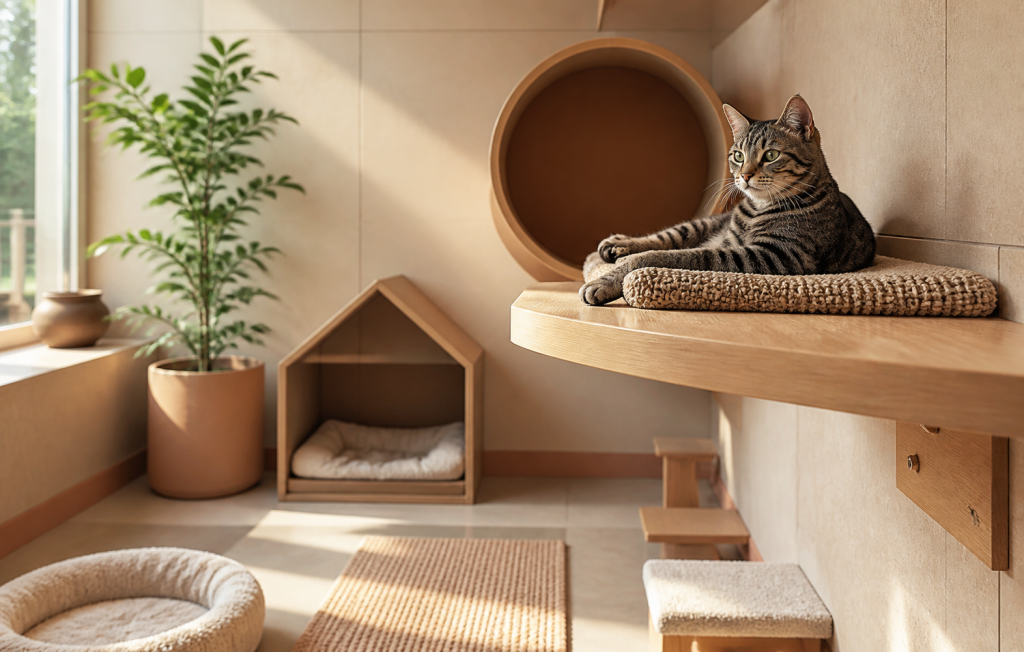
Pet Care Plus boards cats in a separate, dedicated area that is staffed 24/7 and positioned away from the dog-care areas. For a senior cat, the practical questions sit underneath that description. Ask what a typical day in the cat area involves, how often a team member checks in, and how the quiet space is maintained when the resort is busy.
You can also ask to see the space. Pet Care Plus welcomes in-person tours during business hours, and a guided visit can be arranged if you would like to walk through with a team member. Seeing the accommodations makes it easier to picture where your cat will rest, and it gives you a chance to ask about anything specific to your cat before you commit to dates.
Confirm the records before you confirm the dates
Cats boarding at Pet Care Plus need current Rabies and FVRCP vaccinations and must be free of external parasites. Those requirements apply to every feline guest, regardless of age. Check your cat’s records early. If a vaccination is due soon, speak with your veterinarian well ahead of the trip so the paperwork is settled before the reservation is.
Bring the vaccination records to check-in. If your cat takes medication, bring it in its original packaging with clear dosing instructions. The requirements and vaccinations page lists what to bring, and the team can walk you through any question by phone before arrival.
Write a short senior-care note
A handoff note for an older cat does not need to be long, but it should be specific. Think of it as the two or three things you would say if you only had a minute at the counter. Pet Care Plus is a boarding resort, not a veterinary provider, so the note should describe routine and preferences rather than ask the team to assess a health concern.
- Daily routine: meals, water, litter, and rest, with times where they matter.
- Medication: what the veterinarian prescribed, the dose, and the schedule, matching the label on the packaging.
- Comfort: what helps your cat settle, and what your cat prefers to avoid.
- Contacts: your number, a backup contact, and your veterinarian’s practice details.
- Questions: anything you want the team to confirm before you leave.
Keep a copy of the note for yourself. If you call during the stay, it helps to refer to the same details the team has in front of them.
Plan how you will check in
Pet Care Plus offers live webcam access so pet parents can view their pet remotely. Ask which care areas are available to view during your cat’s stay, so you know what to expect before you log in from an airport or a relative’s living room. If you would rather speak to a person, ask how and when to call for an update.
Decide before you leave who can be reached if the team cannot contact you. Choose a backup who knows your cat, has the veterinarian’s details, and understands the role you have discussed with the resort. Ask the team to confirm any required authorization. Keep current numbers with the care note and use the Pet Care Plus contact route to clarify the arrangement before travel.
Give the first stay a realistic shape
If your cat has never boarded, a shorter first stay can be a sensible way to learn how your cat responds to the space and the routine before a longer trip. That is not a rule, and it is not required. It is simply a way to gather information while the stakes are low. Mention your cat’s age and boarding history when you request the reservation so the team has the context.
After the stay, ask what the team noticed. Did your cat eat on the usual schedule? Where did your cat choose to rest? Those observations are worth adding to your note for the next visit, and they are worth sharing with your veterinarian at the next routine appointment if anything seemed different from home.
How to request a senior cat’s stay
New clients start with the New Client Reservation form. The team reviews the request and confirms availability and next steps; sending the form does not confirm a booking. Returning clients can use the existing-client reservation path. For a question specific to your cat, call (312) 397-9077 or contact the team before you send the request.
Describe the individual cat rather than an age category
Age gives context, but it does not explain every need. Two older cats can have very different routines, preferences, and veterinary instructions. Before discussing boarding, write down the details that distinguish your cat’s ordinary day. Where does the cat choose to rest? Which resources are used most often? What changes have you noticed recently? Keep the description grounded in observations rather than assuming that every older cat needs the same arrangement.
If something has changed, tell your veterinarian before treating it as an ordinary part of ageing. A boarding request is not the place to establish the cause of a new symptom. You can still provide the resort with clear, current information once the appropriate questions have been addressed. The aim is a care conversation based on your cat’s actual situation, not a generic senior-cat label.
Make access questions specific
Ask about the physical arrangement of the accommodation in terms relevant to your cat. You might need to understand how food, water, litter, and resting areas are positioned. Explain any current veterinary advice or observed difficulty that affects those questions. Do not assume that a photograph of a quiet space establishes whether every part of it suits your cat.
Discuss what can actually be considered for the stay. A request for a familiar type of bedding or another accommodation detail needs confirmation. If the team cannot provide a particular arrangement, it is better to understand that before travel. Keep the answer with the reservation so the plan is not based on a casual impression from a previous visit or an unrelated article.
Keep a useful baseline without keeping a medical diary
A short account of normal meals, litter habits, activity, and rest can help explain what you mean when you say a routine is typical. Choose details another person can observe. Avoid vague phrases such as “acts old” or “has always been fussy.” Include when a current change began and what professional instructions apply, if any.
Do not ask the boarding team to interpret a lengthy collection of unexplained health data. Give it the information it requests for the care arrangement and provide veterinary records through the accepted route. If you want advice about which observations are important, ask your veterinarian. The resort can describe what it notices during care; that is different from assessing the medical significance of a change.
Prepare a calm handoff for both owner and cat
Pack records and accepted supplies separately from the carrier so they can be accessed without disturbing the cat during arrival. Confirm the resort’s handoff process in advance. If another person is bringing the cat, make sure that person has the current instructions and understands which questions still need an answer. A familiar family member may still be unfamiliar with the booking record.
Allow time for a short, focused conversation. Lead with the details that affect the stay, then ask how any remaining information should be supplied. Keep a copy of the note you hand over. If a last-minute care instruction changes, identify the new version clearly rather than leaving the team to reconcile two documents while you are leaving for the airport.
An example of turning a concern into a question
Imagine an owner who says an older cat “needs everything quiet.” That statement expresses a concern but does not explain the practical need. The owner can make it more useful by describing where the cat rests at home, which ordinary sounds prompt the cat to move away, and what relevant advice the veterinarian has provided. The owner then asks how the resort’s feline accommodation is arranged.
The answer may help the owner decide which details to discuss further. It should not be interpreted as a guarantee that the cat will respond in a particular way. This example illustrates a better conversation, not a diagnosis or a promised outcome. Specific questions make it easier to understand the arrangement that is actually available for the requested dates.
Plan communication before the stay begins
Ask how updates are normally provided and which contact route to use for a question. If you will be difficult to reach, discuss an appropriate backup contact through the resort’s process. Provide current veterinary details and clarify any permissions the team requires. A person listed as a contact is not automatically authorized for every possible decision or for collection.
Choose a small number of practical questions for updates. For example, ask whether the written routine was clear or whether the team has an observation it wants you to discuss further. Avoid interpreting the absence of a particular photograph or message as evidence about your cat’s health. Use the communication arrangement you agreed to, and seek veterinary advice for medical concerns.
Keep departure and return notes connected
At collection, ask about any practical issue that arose with the instructions or supplies. Check the returned belongings, records, and accepted medication packaging before leaving. If a detail is unclear, ask while the stay is easy to identify. A tired traveller may be eager to leave, but a brief clarification can prevent confusion at home.
Write down the observations the team shares without adding an explanation that has not been established. Bring relevant concerns to your veterinarian. For the next reservation, update the note with useful changes rather than simply adding more pages. The next care team needs the current routine, not an archive in which an old instruction looks as important as the latest one.
Review the plan when your cat’s circumstances change
An arrangement that was suitable for a previous stay may need reconsideration when your cat’s routine or veterinary instructions change. Tell the resort about material differences before requesting another visit. Ask whether the same accommodation conversation applies and what information should be refreshed. Do not assume that returning-client status removes the need to discuss an older cat’s current needs.
The same applies when your travel becomes longer, the collector changes, or a backup contact is unavailable. These are practical changes that can affect the handoff even when the cat’s health is stable. Keep the plan concise enough that you and the resort can identify what has changed. A current, individual record is more helpful than a standard senior-care checklist copied without review.
A preparation check for the household
Before departure, ask another person involved in care to read the note. Can they identify the food, the current instructions, the accepted belongings, and the contact plan? Can they distinguish a confirmed arrangement from a question you still intend to ask? If their interpretation differs from yours, clarify the wording before the handoff.
Then review the plan with the resort through its accepted process. Confirm the dates, the records received, and the relevant care discussion. Keep your veterinary advice separate and current. You do not need to predict every possible event during a trip. You need a clear account of this cat’s needs, an arrangement the team has accepted, and a way to communicate when a question arises.
Questions about boarding an older cat
Is there an age limit for cat boarding at Pet Care Plus?
Age is not listed as a requirement. Cats need current Rabies and FVRCP vaccinations and must be free of external parasites. Mention your cat’s age and any routine care needs when you request the stay so the team can confirm the plan with you.
Can the team give my senior cat medication?
Confirm with the team before booking whether the prescribed care can be accommodated. Bring accepted medication in its original packaging with clear veterinary instructions. Packing a medicine does not itself confirm the resort can administer it; dosing and medical decisions belong with your veterinarian.
Will my cat be near the dogs?
No. Cats stay in a separate, dedicated area with quiet, feline-focused accommodations away from the dog-care areas. You can tour the space during business hours before you book.
How do I check on my cat during the stay?
Pet Care Plus offers live webcam access. Ask which care areas can be viewed during your cat’s stay, and ask how to call for an update if you prefer to speak with the team.