Chicago pet parents are not short on options when it comes to dog daycare. What is harder to find is clarity. Every facility says they are safe. Every website has smiling dogs. Every review sounds great until you read the one that makes your stomach drop.
Safety in dog daycare is not one single feature. It is a system. It is the combination of staffing, facility design, cleaning standards, dog grouping, routines, and communication that keeps normal play from turning into preventable problems.
And for busy Chicago pet parents, safety is not just about avoiding worst-case scenarios. It is about having confidence that your dog is spending their day in a place that is structured, supervised, and thoughtfully run.
If you are evaluating dog daycare in Chicago, here are the key features that matter most, what they actually mean in practice, and what questions to ask so you can choose with confidence.
Safety Starts with Real Supervision, Not Just a Locked Door
A safe daycare is not simply a facility that is open during business hours and has staff in the building. It is a place where supervision is active, consistent, and intentional.
Active supervision means staff are not multitasking in a way that pulls attention away from the dogs. They are watching body language, stepping in early when play escalates, redirecting overstimulation, and managing transitions like group changes, rest breaks, and potty routines. The best daycares prevent issues by catching the small signals before they become big problems.
For Chicago pet parents, this matters because dogs are not operating in a calm, predictable environment all day long. There are arrivals, departures, energy surges, and social dynamics, especially in group play. Safety does not come from hoping dogs work it out. Safety comes from trained humans who know what they are looking at and are prepared to guide the day.
At Pet Care Plus, this approach is reflected in the way our daycare is structured and closely monitored throughout the day. Our program is supported by staff training in group play management, dog body language, and canine health, allowing us to actively supervise interactions rather than leaving dogs to self-manage.
We focus on maintaining appropriate staffing levels and thoughtful group dynamics so dogs receive attentive care in a controlled, well-supported environment.
What you want to hear during a tour is not vague reassurance. You want specifics about how staff supervise, how they intervene, and how the day is designed to keep dogs from becoming overtired or overwhelmed.
A Safe Doggy Daycare is Structured, Not a Free-for-all
One of the most overlooked safety features in dog daycare is the schedule.
Many pet parents assume more play equals a better day. In reality, a constant high-energy environment can increase the risk of conflict, stress, and injury. Most dogs need significant rest each day, and daycare should respect that. A safe daycare builds rest into the routine because rest is not an add-on. It is a safety tool.
A structured daycare includes planned play periods, rest breaks, and a consistent flow to the day. This reduces overstimulation, helps dogs regulate emotionally, and keeps play from tipping into cranky behavior.
Pet Care Plus is very clear on this point. Our daycare is structured with a dedicated midday nap time, and dogs rest in their own private glass-front suite in a climate-controlled environment. That approach supports both safety and emotional well-being. You get a dog that has fun, but also has a chance to reset.
If a facility tells you the dogs play all day long with no rest, that is not automatically unsafe, but it should raise a question: how do they prevent overstimulation and manage fatigue? A safe daycare will have a clear answer.
Grouping by Temperament is Safer than Grouping by Size Alone
Group size matters, but it is not the whole story.
Safe daycare grouping considers play style, confidence level, social comfort, energy, and tolerance for chaos. Some small dogs love big-dog energy. Some large dogs are gentle observers. Some dogs want social play in short bursts and then prefer space. These differences matter more than weight.
A safety-first daycare will evaluate dogs before placing them into group play. That evaluation should focus on temperament and comfort rather than simply asking whether a dog is friendly.
At Pet Care Plus, every dog undergoes a behavioral assessment before joining a playgroup, allowing us to understand their comfort level, play style, and individual needs. We take a one-on-one approach to getting to know each dog before group placement, and we never rely on size alone when making decisions. Instead, we place dogs into the option that best suits their personality, energy level, and preferences so they can enjoy a safe and positive daycare experience.
That is exactly what a busy Chicago pet parent should want, especially if their dog is not the loudest or boldest in the room.
When touring any daycare, ask how they decide which dogs play together. If the answer is basically “big dogs here, small dogs there,” you should dig deeper. A safe facility will talk about temperament, supervision, and how they adjust groups over time.
The Facility Should be Purpose-built for Safety and Cleanliness
Chicago is a dense city. Space is expensive. A lot of daycares operate in converted warehouses or adapted storefronts. Conversion is not automatically bad, but purpose-built design gives you advantages that are directly tied to safety.
A modern, safety-first daycare should have:
- Clear separation between spaces so dogs are not constantly funneling through tight chokepoints
- Climate-controlled areas that stay comfortable during Chicago winters and summer humidity
- Flooring that supports traction and reduces slip risk
- Secure gates and controlled access points
- Areas designed for rest and decompression, not just play
At Pet Care Plus, our purpose-built, state-of-the-art pet resort was designed from the ground up with safety, comfort, and cleanliness in mind. We offer extensive play space with both indoor and outdoor areas, along with daily deep cleaning using veterinary-grade cleansers to maintain a healthy environment.
Our facility is supported by multiple air handling systems that serve different sections of the resort independently.
Clean, well-circulated air is not a luxury in a space with many dogs. It plays a critical role in comfort, odor control, and overall cleanliness, helping us maintain a consistently safe and pleasant environment for every pet in our care.
If you are touring a daycare, notice the little things. Does the space feel chaotic or controlled? Are there clear zones for different needs, or is every dog pushed into the same environment? Is the air stale? Is the floor slick? These details tell you whether a facility is designed around dogs or simply built to hold dogs.
Cleaning Standards are a Safety Issue, not a Cosmetic One
A clean daycare is not just pleasant. It is protective.
Dogs share space, surfaces, and air. Cleanliness reduces the risk of illness spread and keeps the environment comfortable. A safe facility will have a clear cleaning routine, staff assigned to cleaning responsibilities, and products that are appropriate for animal environments.
At Pet Care Plus, we deep clean all areas of our facility every day using veterinary-grade cleansers to support a clean, healthy environment.
We also utilize dedicated air filtration systems to help maintain fresh, well-circulated air throughout the resort. In addition, our team performs daily wellness checks as part of our overall commitment to safety, allowing us to closely monitor each pet’s comfort and well-being during their stay.
During a tour, ask how often play areas are cleaned, how accidents are handled, and what the daily cleaning schedule looks like. A strong facility will answer clearly. A weak facility will answer vaguely.
Also, pay attention to smell. A place can be busy and still smell clean. Heavy odor often indicates ventilation and cleaning issues, and those are not things you want your dog breathing in for hours.
Safe Daycare Includes Options for Dogs Who Do Not Love Group Play
Not every dog is a group-play dog, and forcing it is not fair or safe.
Some dogs prefer human interaction. Some dogs are shy. Some dogs get stressed by chaotic environments. Some dogs are seniors who need gentle movement and more rest. A safe daycare has alternatives that still provide engagement without pushing a dog past their comfort level.
When choosing daycare, look for the right flexibility. Not flexible scheduling. Flexible care.
Ask what happens if a dog is not enjoying group play. Do they have a one-on-one option? Do they provide rest breaks? Do they adjust groups? Safety includes the ability to adapt.
Staff Training Matters More Than Fancy Amenities
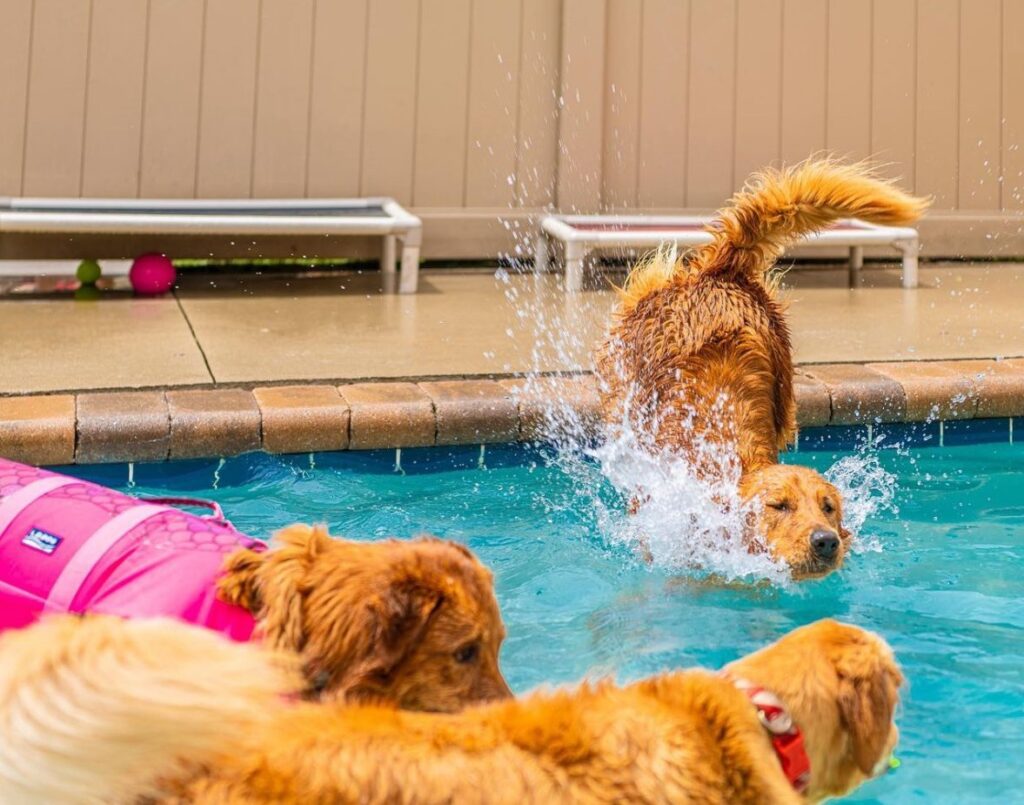
Amenities are great. A heated, in-ground saltwater pool is genuinely special, and Pet Care Plus has one. Private glass-front suites are an important comfort and rest feature, and we have those too.
But amenities do not create safety on their own.
A safe daycare is driven by a team that is trained, consistent, and accountable. Training should include dog body language, appropriate intervention techniques, safe group management, and basic canine health observation. Staff should also be supported by clear protocols so safety does not depend on one superstar employee having a good day.
At Pet Care Plus, team members complete enhanced training and industry-leading programs in group play, dog body language, and canine health before they are approved to supervise daycare groups. We believe safety starts with people, and investing in staff education ensures our dogs are cared for by knowledgeable professionals who know how to read situations, respond appropriately, and support a calm, well-managed environment throughout the day.
When you visit a daycare, watch the staff interaction. Do they seem calm and in control, or frantic and reactive? Do they interrupt bad play early, or do they wait until it escalates? Do they know the dogs by name? Do they appear to enjoy the work? The staff’s emotional tone often reflects the facility’s.
Safety includes rest, comfort, and emotional regulation
This is the part many pet parents do not think about until they have a dog who comes home frantic, exhausted, or wired after daycare.
Safety is not just physical. It is also emotional.
Dogs that are constantly overstimulated can become more reactive over time. Dogs that never rest can become cranky. Dogs that feel overwhelmed can shut down or develop stress behaviors. A safe daycare builds a day that supports regulation, not just energy output.
Rest breaks, quiet spaces, temperature control, soothing routines, and consistent handling all contribute to a dog feeling secure.
If your dog comes home calm, tired, and content, that is often a sign the day was well-balanced. If your dog comes home frazzled and unable to settle, it may be a sign that they are not getting enough rest or the environment is too intense.
Communication and transparency are part of safety
Busy Chicago pet parents need clear communication because they are not hovering over their dog all day. You need to trust the facility to tell you what is happening, not just what you want to hear.
A safe daycare communicates clearly about:
- How evaluations work
- What a typical day looks like
- How they handle injuries, illness concerns, or behavior changes
- What they need from you in terms of vaccines and information
- How will they update you if something is off
We emphasize proactive communication with pet parents and daily wellness monitoring. We also offer photo updates in some contexts and services, which can be a reassurance element for many pet parents, especially first-timers.
Transparency is also about tours. A facility that is proud of its safety systems is usually comfortable showing you the space, explaining protocols, and answering questions without defensiveness.
Chicago-specific Considerations to Keep in Mind
Chicago is not an easy city for pets. Weather swings are intense. Sidewalk salt is a winter reality. Summer humidity can be heavy. Traffic makes transportation stressful. Many pet parents live in condos, apartments, and busy neighborhoods with limited outdoor space.
That means a safe daycare should provide:
- Climate-controlled indoor play and rest spaces
- Clean, well-ventilated air
- A structured routine that prevents overstimulation
- Thoughtful handling during arrivals and departures
- Options that fit different dog personalities and energy levels
- Convenient add-on services that reduce travel and errands
Pet Care Plus checks many of these boxes by being a one-stop shop for daycare, boarding, grooming, and pet taxi services. For busy pet parents, that is not just convenience.
It reduces the number of transitions your dog experiences and makes routines more consistent.
What to Ask When You Tour a Daycare
A tour is where safety becomes real. Rather than relying on generic questions, focus on how the facility runs day to day.
Ask questions like:
- How do you evaluate dogs before group play?
- How do you group dogs, and how often do groups change?
- What does a typical day look like, including rest?
- How do you handle dogs who are not comfortable in group play?
- What training do staff complete before supervising play groups?
- How do you monitor health and communicate concerns?
- What is your cleaning routine, and how often are spaces deep-cleaned?
- How do you handle emergencies, and what is your protocol?
You are not trying to interrogate the staff. You are trying to see whether the facility has systems, not just good intentions.
The Bottom Line on Doggy Daycare Safety
A safe dog daycare is built on structure, supervision, and thoughtful design. It is not just a big room full of dogs. It is a carefully managed environment where dogs can play, rest, and engage in ways that match their needs.
For Chicago pet parents, especially those juggling demanding schedules, the goal is simple: you should be able to drop your dog off and go about your day knowing they are in capable hands, in a clean and climate-controlled space, with a routine that supports both safety and well-being.
When you find a daycare that prioritizes trained supervision, temperament-based grouping, structured rest breaks, strong cleaning standards, and clear communication, you are not just choosing a place for your dog to spend the day. You are choosing consistency, comfort, and peace of mind.