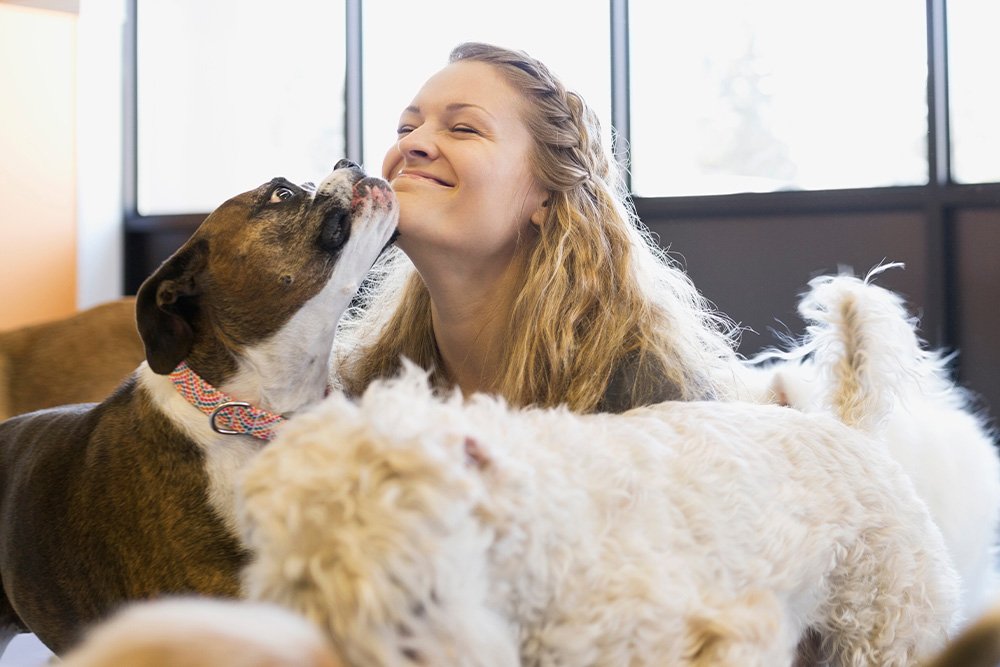
A tired dog and a well dog are not the same thing. A tired dog has burned through energy. A well dog is rested, confident, and emotionally balanced. For years the pet care industry has sold the first as if it were the second  “we’ll wear them out”  and a quiet evening at home felt like proof it worked. But exhaustion isn’t wellness, and the difference matters more than most owners are told.
Why "we wore them out" became the standard
It’s an easy promise to make and an easy result to see. A dog that collapses on the couch by 6 p.m. looks like a success. The problem is that the same outcome can come from genuine balance or from overstimulation and stress  and from the outside they look identical. A facility built around nonstop play optimizes for the visible result, not the underlying state of the dog. The dog isn’t content; the dog is depleted.
What a tired dog actually is
Sustained overstimulation has a cost. Dogs kept in high-arousal environments for hours can run elevated stress hormones, struggle to self-regulate, and rehearse exactly the frantic behaviors owners are hoping to reduce. Over time, a daycare experience built on adrenaline can make a dog more reactive, not less  more easily triggered, less able to settle. The calm at home that night may be a crash, not a rest.
What a well dog looks like
A well dog moves through the world with a steadier baseline. They settle more easily, recover from excitement faster, navigate other dogs with more confidence, and carry less background stress. This is the difference between draining a dog and developing one. Well dogs aren’t made by burning energy; they’re made by structure, positive social experiences, and the chance to rest  repeated consistently over time.
Why rest is part of the care, not a pause in it
Left to constant stimulation, most dogs won’t choose rest on their own  the way a child won’t opt out of a party. Building genuine recovery into the day is what keeps arousal from climbing all day long. At Pet Care Plus, rest and decompression are scheduled parts of the experience, not gaps in it, because balanced activity and recovery is what actually supports a dog’s nervous system and long-term wellbeing.
How structure creates wellbeing
Structure is the mechanism behind a well dog. Thoughtfully sized groups, guided interaction, calm leadership from handlers, and a predictable rhythm give dogs something an open free-for-all can’t: the safety to relax and the conditions to build confidence. This is why we size and pace our groups deliberately, and why our handlers stay engaged and observant rather than simply present. The aim isn’t to fill the day with motion. It’s to send your dog home emotionally balanced  and to support that balance across their whole life.
What this means for daycare and boarding
When you evaluate daycare or boarding, the question to ask isn’t “Will my dog be tired?” It’s “Will my dog be well?” Look for structure, real rest, small thoughtful groups, and a team that observes each dog as an individual. A tired dog is the easy promise. A well dog is the one worth choosing a facility for.
Frequently asked questions
Is it good if my dog comes home exhausted from daycare? Not always. Exhaustion can signal overstimulation rather than healthy activity. A well-structured day leaves a dog calm and content, not depleted.
Can too much dog daycare be bad for my dog? It can, if the environment is built around constant high-arousal play. Sustained overstimulation can raise stress and reinforce reactive behavior. Structure and rest are what make daycare beneficial.
What’s the difference between a tired dog and a well dog? A tired dog has spent energy; a well dog is rested, confident, and emotionally balanced. Good care aims for the second, not the first.